30.06.2026
9 Cloud Formations


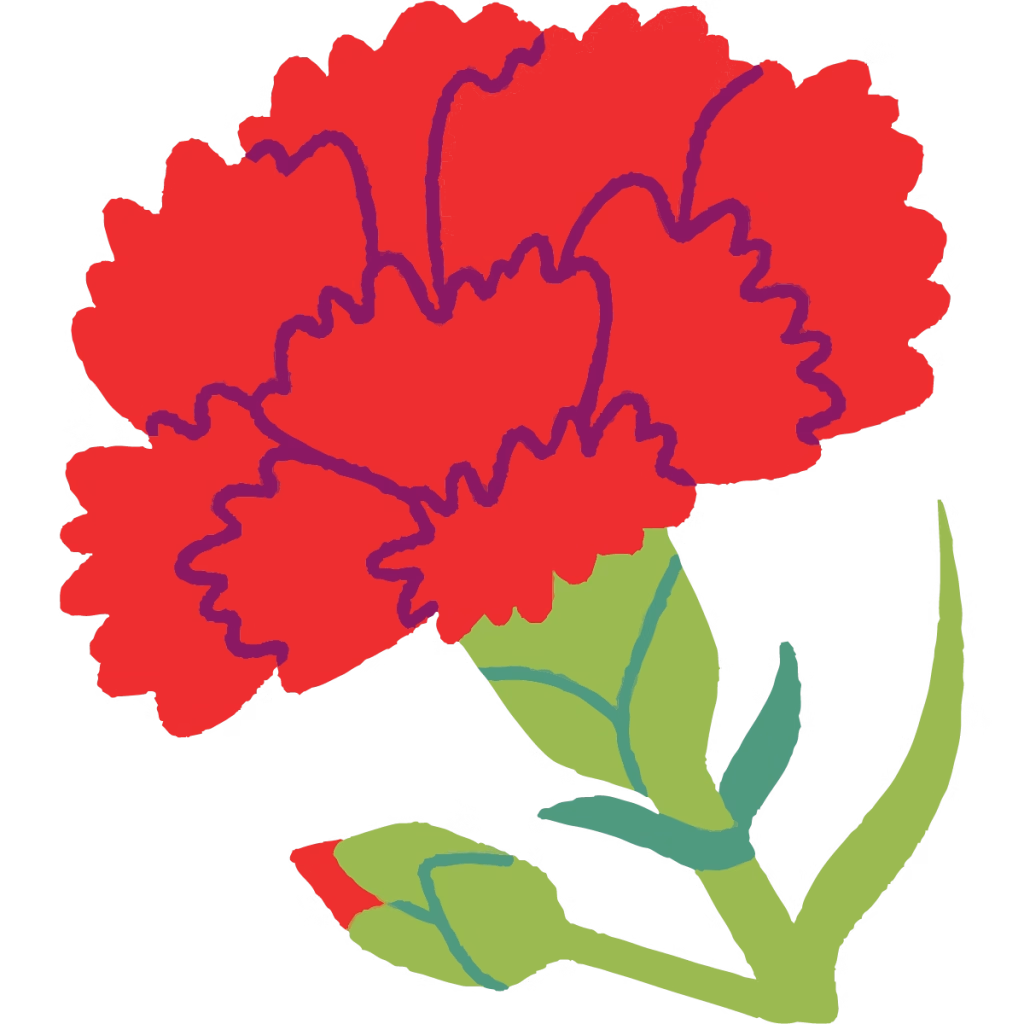
The carnation has historically been the flower most associated with love in our history, not the rose.
The ancient Greeks named it dianthus, meaning “divine flower,” and Victorian floriography assigned distinct meanings to each color: red carnations expressed deep love and admiration, pink suggested “I’ll never forget you,” and yellow signaled rejection.
According to Shakespeare Birthplace Trust, Striped carnations were used to convey a refusal of a suitor’s affections without speaking the words aloud, allowing a polite “I cannot be with you” to pass quietly between hands.

The dahlia carries a Victorian message of lasting commitment and a bond that endures through change.
Its layered petals were read as a symbol of a strong, multifaceted relationship, and it became a fashionable wedding flower in the 1840s on both sides of the Atlantic.
Native to Mexico and Central America, the dahlia was first cultivated by the Aztecs and was named after Swedish botanist Anders Dahl. Mexico declared it the national flower in 1963, and it remains the traditional flower of a 14th wedding anniversary.

The daisy quietly carries a heavier meaning than its simple white-and-yellow face suggests. In the Victorian language of flowers, it stood for loyal love, innocence, and the ability to keep a secret, often translating to the phrase “I’ll never tell.”
According to Petal Republic, the name itself comes from the Old English “daeges eage,” or “day’s eye,” because the petals close at dusk and reopen at dawn. In Norse mythology, the daisy was the sacred flower of Freya, the goddess of love, beauty, and fertility.
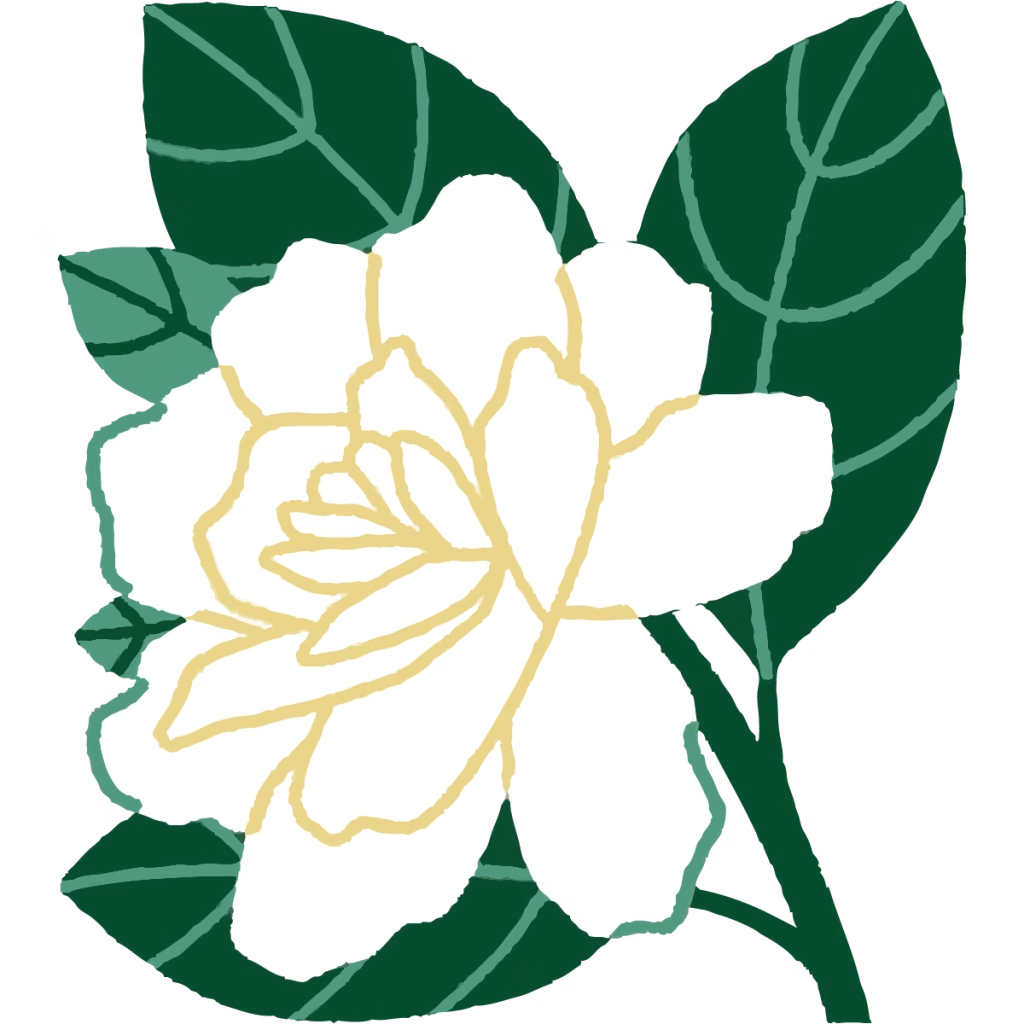
The gardenia was the Victorian flower of secret love.
With strict social codes governing courtship, suitors who couldn’t openly declare their feelings sent an unmarked gardenia, allowing the recipient to know she had a secret admirer without identifying him. The intoxicating scent reinforced the meaning: visual purity on the outside, overwhelming feeling underneath.
Singer Billie Holiday famously wore gardenias behind her ear at every performance, cementing the flower’s long association with deep, quiet, and slightly melancholy affection.
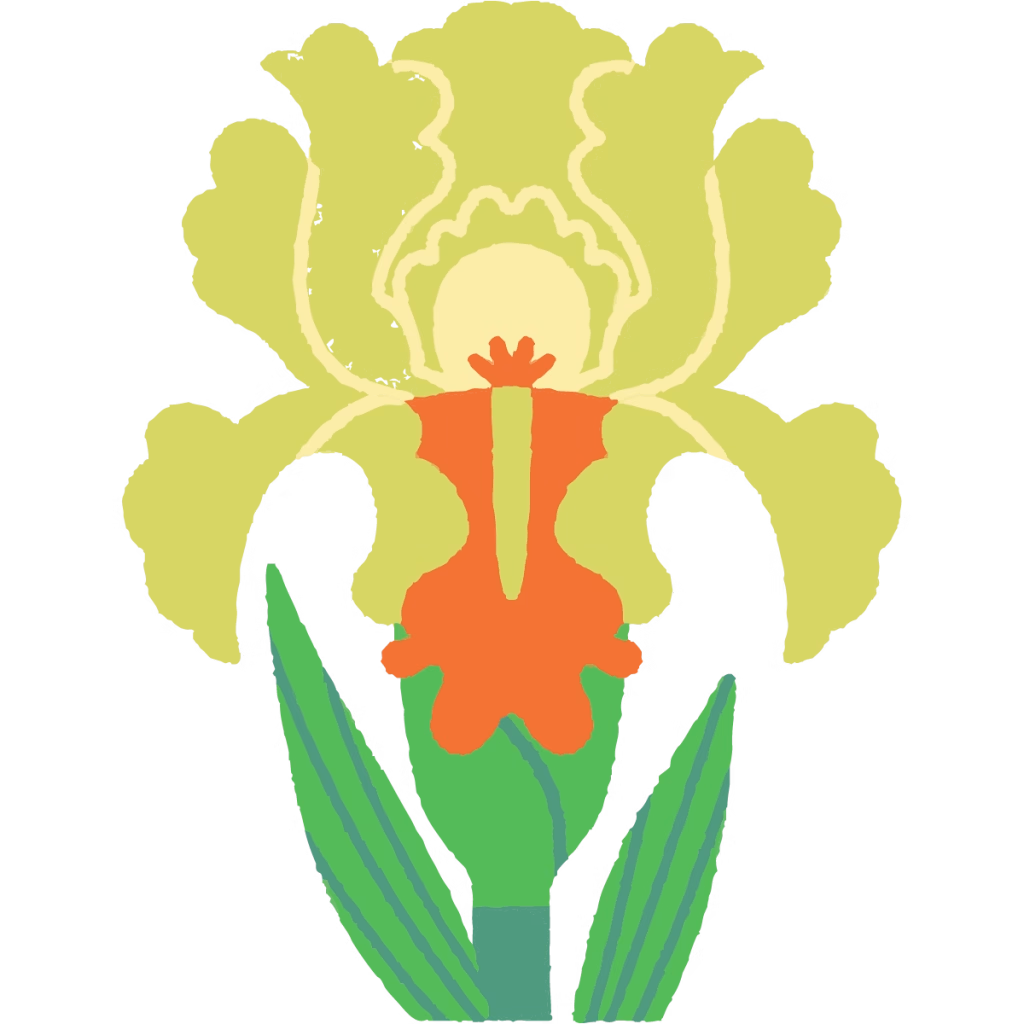
The iris takes its name from the Greek goddess of the rainbow, who served as a messenger between the gods and humans. In Victorian floriography, the iris symbolized faith, hope, wisdom, and “a message,” with each color carrying its own variation: purple for admiration and respect, blue for faith and hope, yellow for passion, and white for purity.
The flower’s three petals were sometimes interpreted as a trio of faith, love, and wisdom, a trinity that appears in Christian, Buddhist, and Hindu traditions alike.

Lilacs are the flower of first love and youthful innocence.
When thinking about the meaning of lilacs, we see they appear throughout 19th-century poetry, most famously in Walt Whitman’s elegy “When Lilacs Last in the Dooryard Bloom’d,” where they represent both love and remembrance.
In Victorian floriography, gifting a purple lilac was a gentle way of reminding someone of an early romance or asking, in essence, “Do you remember?” White lilacs signaled purity, pink suggested youthful affection, and the flower itself was inseparable from spring, since it’s among the first to bloom each season.

The lily has stood for purity and devoted love across nearly every culture that grew it.
Greek mythology held that lilies sprang from the milk of Hera, queen of the gods, while Christian tradition associates the white Madonna lily with the Virgin Mary’s purity and faithfulness.
In the Victorian language of flowers, white lilies expressed virtue and sincere love in courtship, while pink lilies conveyed deep appreciation and romantic affection. Their fragrance, used by the Romans to scent pillows, made them synonymous with intimacy in classical literature. Learn more about the meaning and history of lily’s here.

The orchid has carried romantic weight across cultures for thousands of years. Ancient Greeks linked it to fertility, the Victorians prized it as a symbol of luxury and rare beauty, and Chinese tradition saw it as an emblem of refinement and devoted friendship.
In modern floriography, orchids represent refined beauty, strength, and love that endures, partly because the plants themselves can bloom for months and live for decades. Pink orchids are the traditional 14th wedding anniversary flower, given to mark a love that has matured with time.
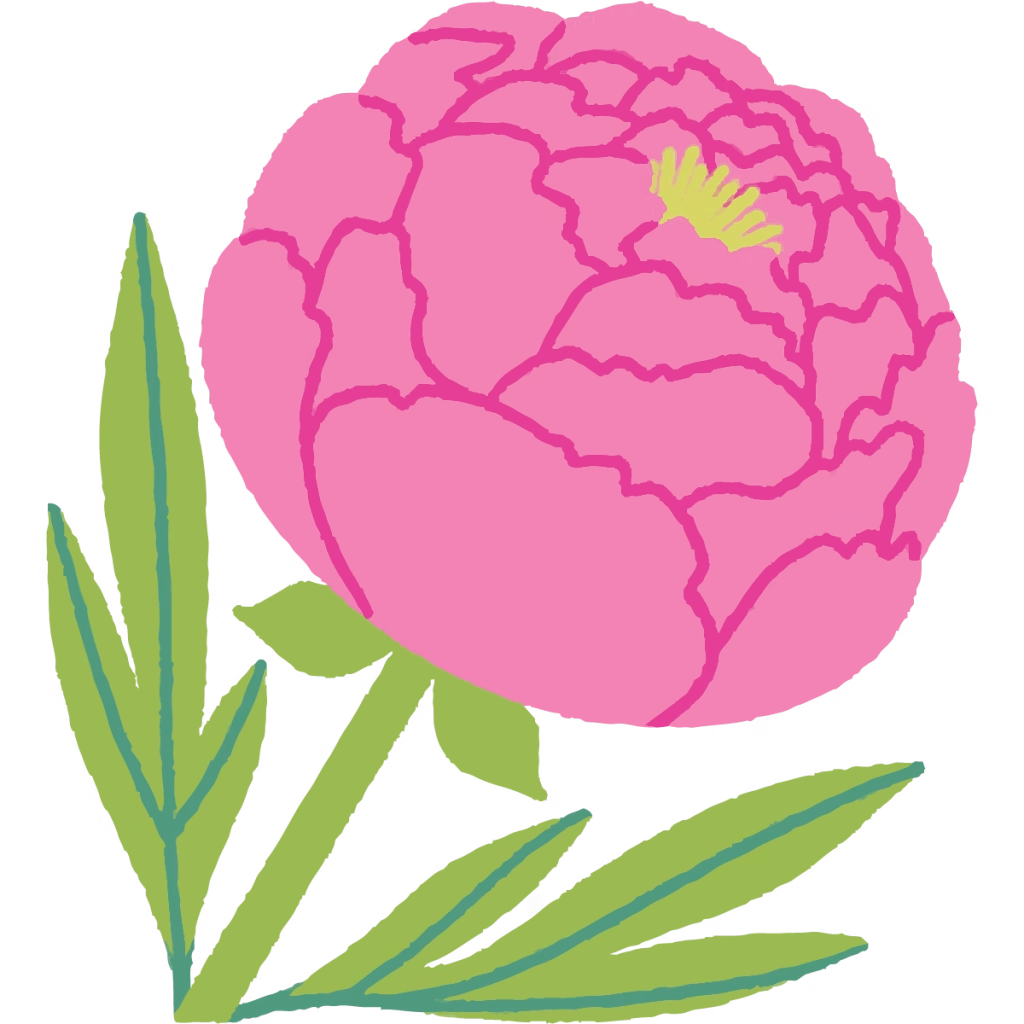
Peonies are often called the “king of flowers” in China, where they have symbolized prosperity, honor, and a happy marriage for over a thousand years.
Across European and North American traditions, the peony’s full, ruffled petals came to represent romance, good fortune, and a joyful union, making it a staple in wedding bouquets.
Victorian floriography also assigned the peony a quieter meaning of bashfulness, since the layered petals appear to hide the flower’s center, suggesting modesty in the face of admiration.

The rose is the most universally recognized flower of love in Western culture, with red varieties symbolizing deep passion and romance dating back to ancient Greek mythology and Aphrodite.
Color shifts the meaning significantly: pink roses convey gratitude and admiration, yellow ones signal friendship rather than romance, and white blooms suggest innocence or new beginnings. The flower has been a central emblem of romantic poetry for centuries, from Robert Burns’s “A Red, Red Rose” to the sonnets of Victorian poets like Christina Rossetti and Elizabeth Barrett Browning.

The tulip is the floriography definition of perfect love, completing what the rose only suggests.
In Victorian flower language, a red tulip was a direct declaration of love, while yellow tulips, once associated with hopeless or unrequited longing, now signal cheer and friendship.
The flower’s deepest romantic roots trace back to Persian poetry and the legend of Farhad and Shirin, a tragic romance sometimes called the Persian Romeo and Juliet, in which the first tulip is said to have bloomed from a lover’s spilled blood. Learn more at Blooming Expert.

The violet may be the most quietly romantic flower on this list.
In the Victorian language of flowers, it meant faithfulness, devotion, and “I’ll always be true to you.”
Long before the red rose became Valentine’s symbol, violets were associated with love and devotion. The Isabella Stewart Gardner Museum shares a legend that St. Valentine wrote his final letter in ink made from crushed violets and signed it “Your Valentine.” From Sappho to Shakespeare and throughout Victorian poetry, violets symbolized constancy, modesty, and enduring love.

The calla lily takes its name from kallos, the Greek word for beauty, and in Victorian floriography it represented magnificent beauty, elegance, and purity.
Despite its name, it isn’t actually a true lily: Carl Linnaeus misclassified it in the 18th century, and the German botanist Karl Koch later moved it to its own genus, Zantedeschia.
The flower’s striking trumpet shape made it a favorite for both bridal bouquets and Easter altars throughout the 19th century, where it symbolized both earthly admiration and spiritual rebirth. Learn more at Kathleen Karlsen Living Arts.

Camellias have a built-in metaphor for lasting love.
Unlike most flowers, which shed their petals one by one, the camellia drops its petals and calyx together, a trait that Chinese tradition reads as two lovers leaving life joined.
Red camellias express deep passion and the message “you’re a flame in my heart,” pink camellias convey longing for someone missed, and white camellias represent purity and adoration. The flower has been cultivated in China for thousands of years and became a status symbol in Victorian England. Learn more at FTD.
This collection of illustrations captures the timeless beauty and quiet meaning of each Flower of Love. The bold palette and delicate detail are designed to make the secret language of flowers feel personal again. Now that you know the meanings, which one are you going to gift?

READY TO EXPLORE?
If you’re the kind of person who wants to take the next step in your learning, and wants to truly understand, gift, and celebrate the meaning behind every flower, we’ve got you covered. At Addvent, we create illustrated lists of places to visit, things to see, and things to do, commissioned as beautiful posters you can display as a reminder of what you’ve accomplished.
Learn the meaning of all 14 Flowers of Love, give them with intention, and celebrate the language of romance with a poster of your own.