24.03.2026
12 Pickled Foods
of Pennsylvania


Pepper cabbage is a chilled, vinegar-dressed salad made from shredded cabbage, sweet peppers, and onion, seasoned with sugar, celery seed, and vinegar. It’s tangier and crisper than coleslaw, with a clean, bright flavor that pairs well with smoked meats and hearty mains. Pepper cabbage is among the foods uncommon outside of places where Pennsylvania Dutch people live. It appears frequently at community dinners, fire hall fundraisers, and church suppers throughout southeastern and south-central Pennsylvania.

Pickled red beet eggs are perfect for family gatherings or just a simple lunch staple. They’re typically made by hard boiling eggs and soaking them with beets in a vinegar, sugar, and beet juice mixture. After a few days, the eggs soak up the flavors to create a tangy, savory treat! They are a Pennsylvania Dutch staple with German roots in the tradition of pickling and preserving, and they appear at nearly every community buffet, deli counter, and farm market in Lancaster and Berks Counties.

Hog maw is a pig’s stomach stuffed with a savory filling of potatoes, sausage, onion, and herbs, then roasted until the exterior is browned and the filling is cooked through. Hog maw is considered a kind of “national dish” among the Pennsylvania Dutch, with the best versions firm enough to slice like sausage, and its origins trace back to pre-Germanic cultures in the Rhineland. It is served at family dinners, community events, and a handful of restaurants in Lancaster County. More than any other dish on this list, hog maw reflects the Pennsylvania Dutch philosophy of using every part of the animal.

Pork and sauerkraut is the traditional Pennsylvania Dutch New Year’s Day meal, eaten to ensure good luck in the coming year. Fermented cabbage is enjoyed throughout the year, but it remains traditionally served with pork on New Year’s Day. The dish is straightforward: a pork roast or ribs slow-cooked with sauerkraut until everything is tender and the flavors have merged. The superstition holds that pigs root forward, symbolizing progress, while chickens scratch backward. On January 1st, nearly every grocery store in Pennsylvania puts pork and sauerkraut on display.

Scrapple is a breakfast meat made from pork scraps and offal simmered with cornmeal, buckwheat flour, and spices, then poured into a loaf pan and chilled until firm. It descends from a Lower Rhineland dish called Panhas, originally eaten as a porridge on butchering day, which eventually evolved into the sliceable, pan-fried form known today. It is sliced thick and fried until the exterior is crisp. In Dutch Country, scrapple is a polarizing food even among locals, but for many it is simply breakfast, served alongside eggs and coffee every morning.
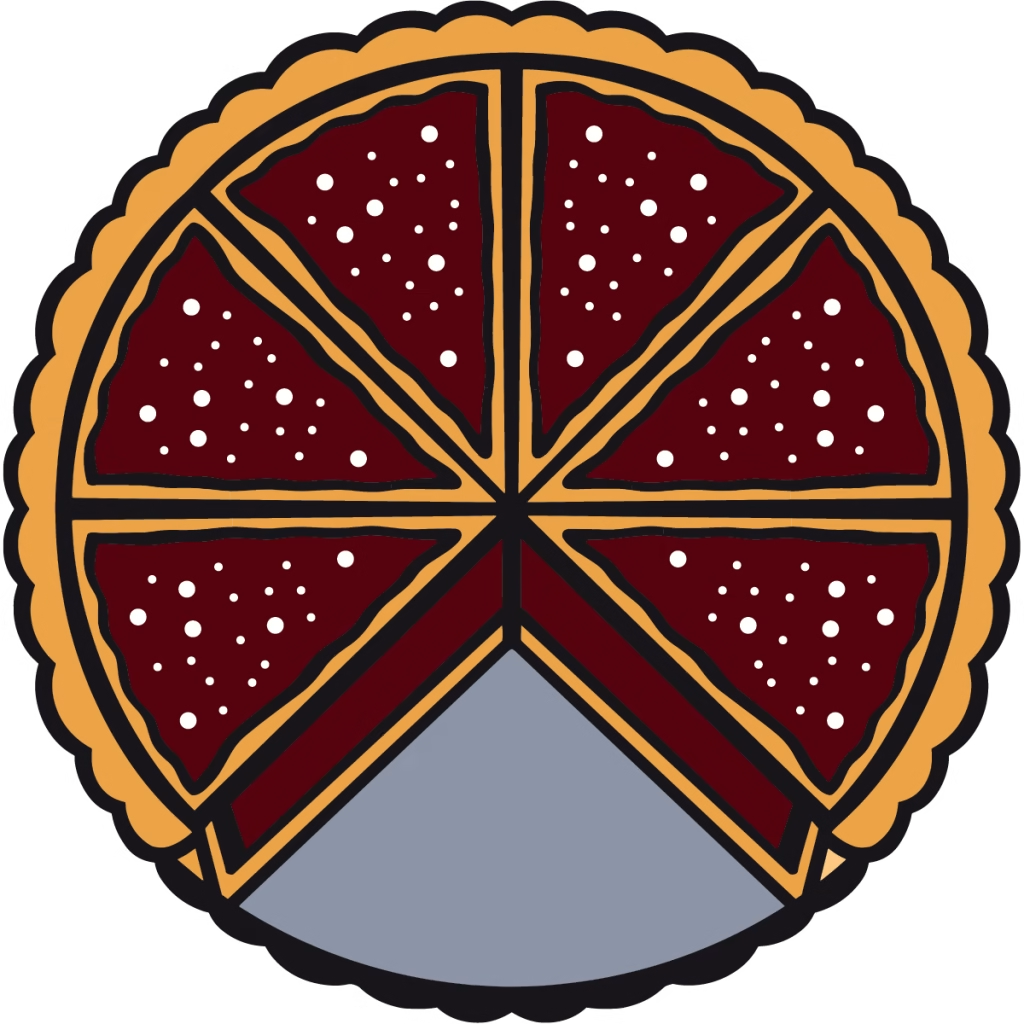
Shoofly pie is a molasses-based pie baked in a pastry shell with a crumbly brown sugar and flour topping. It was first introduced commercially at the U.S. centennial celebration in 1876. There are two styles: wet-bottom, which has a gooey, syrupy layer beneath the crumb, and dry-bottom, which bakes through more completely. According to Amish Heritage, wet-bottom shoofly pie is the version most closely associated with Lancaster County Amish and Mennonite communities, and it remains the most iconic Pennsylvania Dutch dessert by reputation.

The soft pretzel’s American story runs directly through Pennsylvania Dutch country. Originating in German-speaking Europe during medieval times, once in Pennsylvania the pretzel became a popular snack sold at markets and county fairs. Made from a simple combination of flour, water, yeast, and salt, the soft pretzel became a beloved snack known for its chewy texture and deep brown crust. The Philadelphia-style soft pretzel remains one of the best-known versions today, found everywhere from street vendors to iconic spots like Reading Terminal Market. Before industrialization, Lancaster and York Counties were home to independent pretzel bakers in nearly every town. Julius Sturgis Pretzels, in Lititz, PA, is recognized as the first commercial pretzel bakery in America.

Strawberry rhubarb pie combines the season’s first strawberries with tart rhubarb stalks in a double-crusted or lattice-top pie, balanced with sugar to soften rhubarb’s sharp edge. It is a classic of Pennsylvania farmhouse baking, made each spring when the two plants are ready at the same time. The combination of sweet fruit and sour stalk is another expression of the sweet-sour balance that runs through Pennsylvania Dutch cooking. It remains one of the most requested pies at Dutch Country bakeries and diners every May and June.

Whoopie pies are two soft, cake-like chocolate rounds sandwiched with a thick filling of sweetened cream. The originals were created in a factory in Massachusetts using industrial baking equipment, but the Amish adapted them and took the tradition to another level entirely. In Pennsylvania Dutch country, whoopie pies are sold at farm stands, markets, and bakeries in flavors beyond the original chocolate, including pumpkin and red velvet. They are firmly embedded in the culinary identity of Lancaster County regardless of their New England origin.

Amish potato salad differs from the mayonnaise-heavy deli standard in that it uses a sweet, tangy dressing made with a cooked base of vinegar, sugar, eggs, and sometimes mustard. The potatoes are soft and yielding, the dressing is creamy but bright, and it typically includes hard-boiled eggs and celery throughout. It leans sweet in a way that surprises people expecting a standard cold potato salad. It is served throughout the year at markets, family reunions, and community events across Lancaster County and the surrounding region.

Apple butter is a thick, deeply concentrated apple spread made by slow-cooking apples with cider, sugar, and warm spices until the mixture turns dark brown and spreadable. Despite the name, it contains no dairy; it is made by slow-cooking apples, apple juice, sugar, and spices until they caramelize into a thick, dark, molasses-like consistency. Apple butter making was historically a communal activity in Pennsylvania Dutch households, with large copper kettles stirred outdoors over open fires in autumn. It is still a fixture at farmers markets and roadside stands across Lancaster and Berks Counties.

Apple cider donuts are cake-style donuts made with reduced apple cider folded into the batter, giving them a concentrated apple flavor and a slightly dense, moist crumb. They are a fall fixture at orchards and farmers markets throughout Pennsylvania, cinnamon-sugar dusted and best eaten warm. Lancaster and Adams Counties, both major apple-growing regions, produce them at stands and orchards from late August through November. They sit somewhere between a pastry and an experience, closely tied to the ritual of fall in Pennsylvania Dutch country.

Apple dumplings are whole peeled apples filled with butter, cinnamon, and sugar, then wrapped in pastry and baked until golden and tender. According to Pennsylvania Dutch Cuisine, they are typically served warm, often with ice cream or a splash of cream, and represent the Pennsylvania Dutch approach to dessert: simple ingredients, honest flavors, nothing wasted. They are a fall staple in Pennsylvania Dutch baking, made when local apples are at their peak. One apple dumpling is a substantial thing; it easily serves as a full dessert on its own.

Schnitz un Knepp, often translated as “apples and buttons,” is a one-pot dish of dried apples and ham simmered together, then topped with dropped dumplings. The most popular form is a baked or stewed mixture of dried apples, ham, and dumplings. It combines the sweet and salty in a way that is deeply characteristic of Pennsylvania Dutch cooking. The dish is old, rooted in the practical preservation traditions of farm families who dried apples in autumn to have fruit available through the winter. The “buttons” refer to the dumplings.

Birch beer is a carbonated soft drink made from the extract of birch bark, giving it a distinctive flavor that is slightly minty and herbal, unlike any mainstream soda. It is especially popular throughout Pennsylvania and is considered a regional specialty in Dutch Country, where it’s available in red, clear, and brown varieties depending on the producer. Many longtime residents grew up drinking it instead of root beer, and it remains common at diners, markets, and pizza shops across the region.
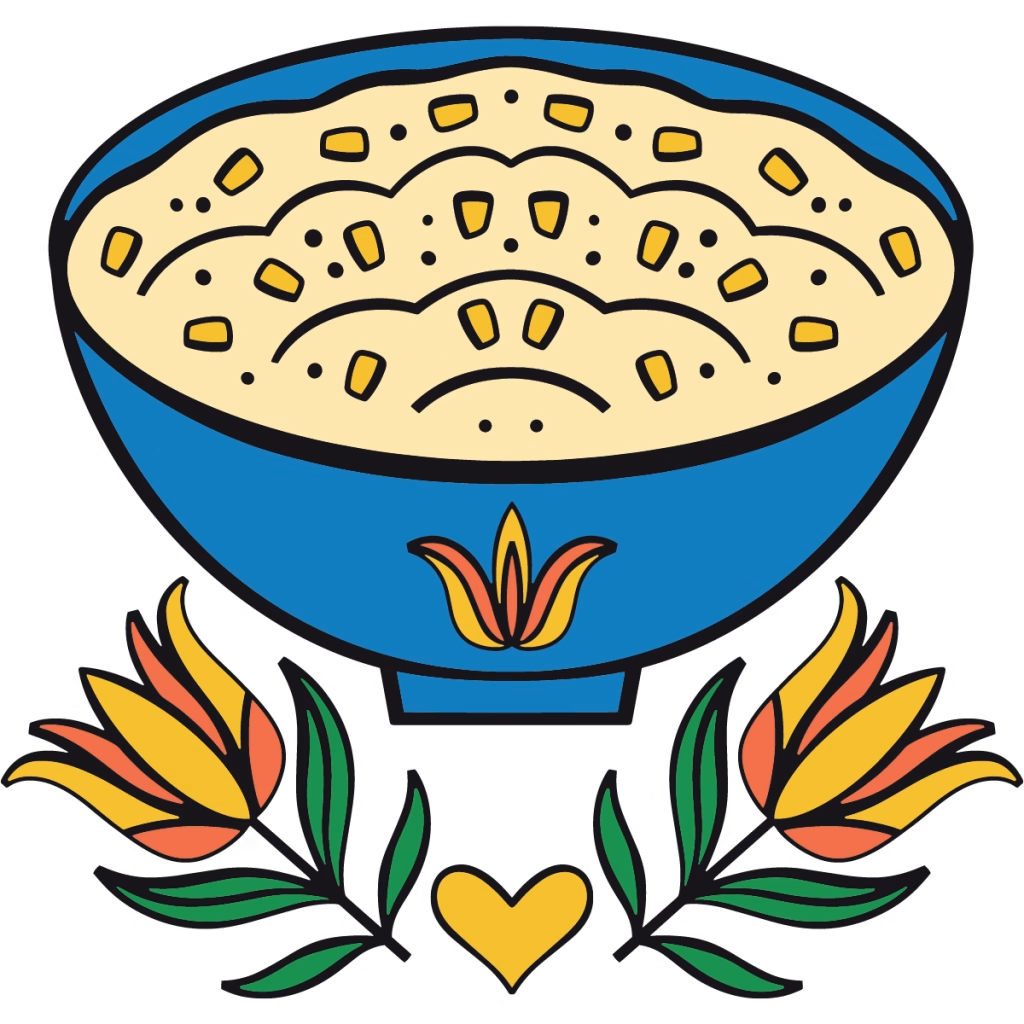
Chicken corn soup is one of the definitive Pennsylvania Dutch dishes, made from a rich homemade chicken broth loaded with corn, shredded chicken, and hard-boiled eggs. Small hand-rolled dumplings called rivels are a common addition, thickening the broth and adding texture. It shows up at volunteer fire companies, church fundraisers, and county fairs across the region every fall, usually made in enormous quantities.
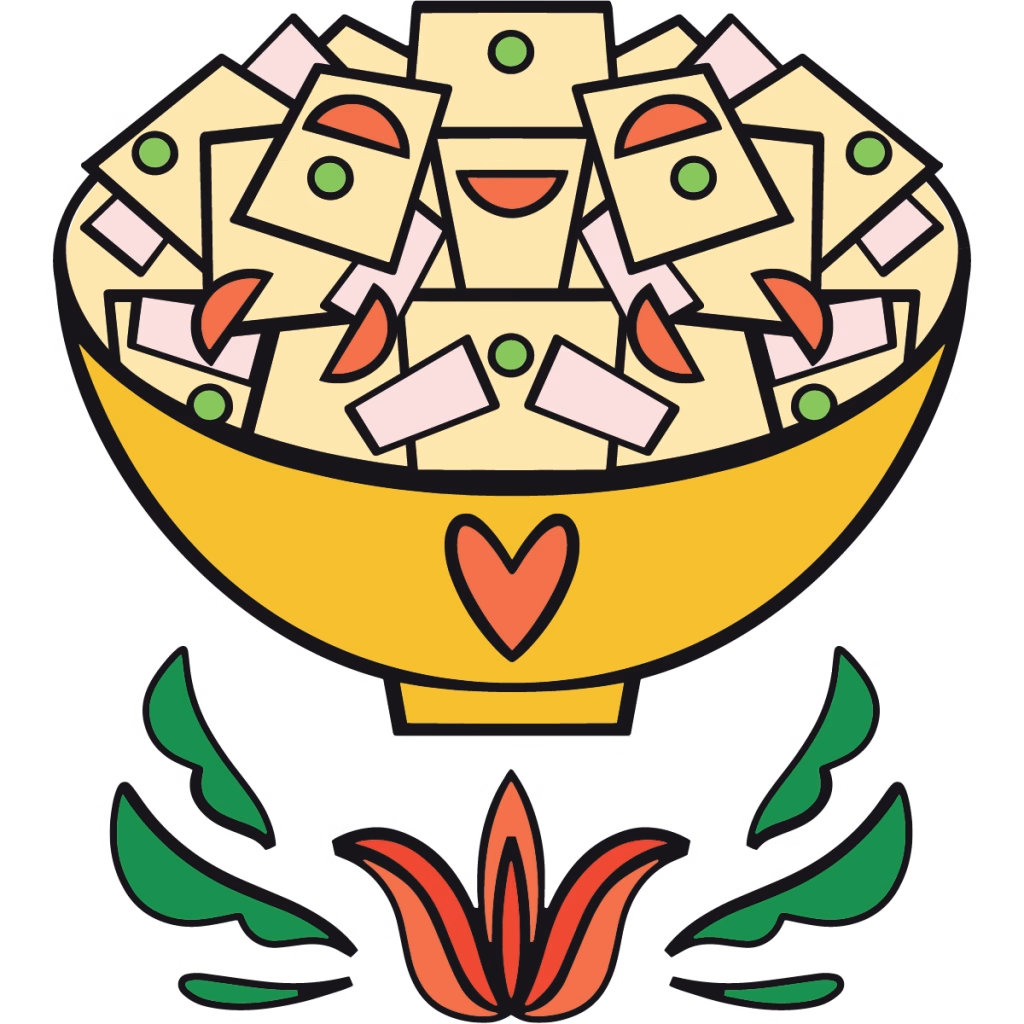
Pennsylvania Dutch chicken pot pie is not the dish most people picture. It is a hearty soup or stew featuring homemade chicken broth, filled with chicken, vegetables, and egg noodles traditionally cut in a square shape. There is no pastry crust; the “pot pie” refers to the thick, flat, hand-cut egg noodle squares cooked directly in the broth. The concept of layering ingredients between noodles may trace to classical antiquity through techniques preserved in the medieval cookeries of southern Germany and Alsace. It is a deeply regional dish that frequently surprises first-time visitors.

Chow chow is a pickled vegetable relish made from a combination of green and red tomatoes, corn, beans, onions, peppers, and cabbage, preserved in a sweet and tangy vinegar brine. It is used as an all-purpose condiment throughout Pennsylvania Dutch country. Every family and producer has a slightly different mix of vegetables and spice balance, making chow chow one of the most variable items in the Pennsylvania Dutch pantry. It is a direct expression of the region’s deep pickling and preserving tradition, built around not letting the harvest go to waste.

Corn pie is a savory, double-crusted pie filled with fresh or canned corn, hard-boiled eggs, butter, and cream. It’s a summer and early fall staple in Lancaster and Berks Counties. The dish has no single fixed recipe; it varies from kitchen to kitchen, sometimes enriched with potatoes or onions. What makes it distinctly Pennsylvania Dutch is its simplicity: a few honest ingredients turned into something deeply satisfying.

Dandelion greens have been a spring tradition for centuries, harvested young from fields and meadows before the plants flower. They are typically wilted in a warm bacon dressing made with vinegar and sugar, a sweet-sour combination that runs throughout Dutch Country cooking. Traditional PA Dutch cooking features the interplay between sweet and salty flavors. The greens are highly seasonal, and for many families their appearance at the table marks the true start of spring.

Fastnacht’s are traditional potato-based doughnuts made for Shrove Tuesday, also known as Pancake or Fat Tuesday, the day before Lent begins. They are a final indulgence before the Lenten season and were historically made to use up ingredients like lard. In Lancaster and Berks Counties, Fastnacht Day is a point of local pride, and many bakeries sell out before noon. Fastnacht’s are denser and less sweet than typical doughnuts, and are often served with butter or molasses instead of frosting or glaze.

Ham and string beans is a slow-cooked dish of green beans simmered for a long time with smoked ham hocks or ham pieces, salt, and sometimes a little onion. The result is a deeply savory side dish where the beans take on the smokiness and richness of the meat. It is the kind of dish built on Pennsylvania Dutch frugality: a ham bone that might otherwise be discarded becomes the foundation of something worth eating on its own. It appears regularly at family gatherings, church dinners, and summer pot luck suppers throughout the region.
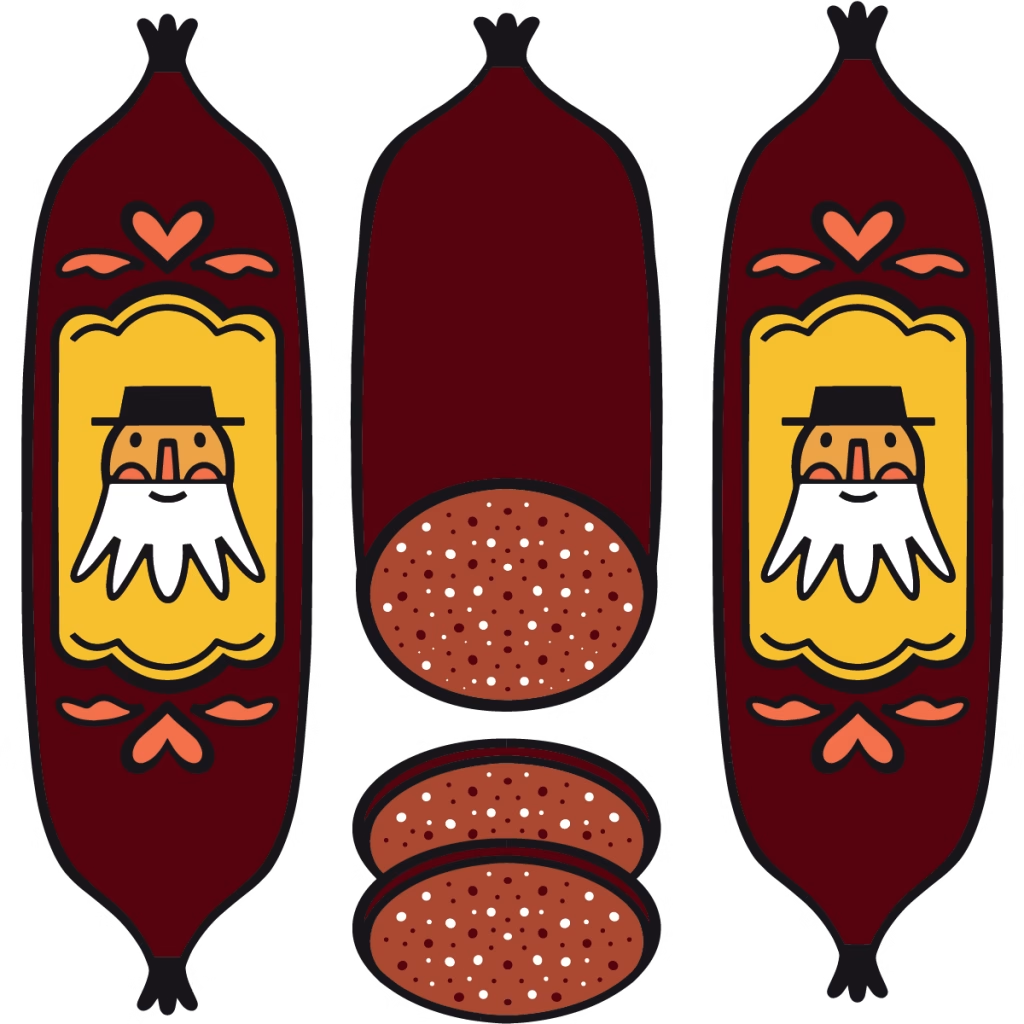
Lebanon bologna is a cured, smoked beef sausage that originated in Lebanon County, PA, and has been made in the region since the early 1800s. It has a deep, smoky flavor and a similar texture to salami. Unlike most bologna, it’s made entirely from beef and goes through a long cold-smoking process that gives it a tangy, fermented character. It’s eaten sliced thin on sandwiches and crackers, and it remains a point of genuine regional pride with several smokehouse producers still operating in Lebanon County today such as Seltzer’s Smokehouse Meats.

Long johns are elongated, raised yeast doughnuts, typically glazed or frosted, and a staple of Pennsylvania Dutch bakeries. They are less sweet than commercial doughnuts and have a more substantial, bread-like texture from the yeast-leavened dough. In Lancaster and Berks County bakeries, they are often sold alongside fastnachts and other fried pastries and are one of those unassuming, everyday foods that locals take for granted and visitors can’t stop thinking about after they leave.

Meadow tea is exactly what it sounds like: tea brewed from wild spearmint or peppermint harvested from the meadows and stream banks of Pennsylvania Dutch country. It’s served cold, usually sweetened, and is especially associated with Lancaster County. For generations it was simply what you drank in summer, brewed in large batches at home. Today it appears on menus across Dutch Country as both a point of nostalgia and a genuinely refreshing drink. It’s one of those things that visitors discover and immediately wish they had at home.
This collection of illustrations was heavily influenced by fraktur imagery and folk art as it incorporates hearts, tulips, and floral vines.
With over 1,000 local farm stands and markets throughout PA, find each one of these Dutch delicacies and try them for yourself! Get to know the artist below and grab a copy of the poster.

READY TO EXPLORE?
Want to take the next step and truly experience, taste, and complete a journey like this one, we’ve got you covered. At Addvent, we create illustrated lists of places to visit, things to see, and things to do, commissioned as beautiful posters you can display as a reminder of what you’ve accomplished.
Taste your way through all 25 Pennsylvania Dutch foods, check each one off your list, and celebrate the adventure with a poster of your own!