16.11.2026
16 Christmas Folk Legends
of Europe


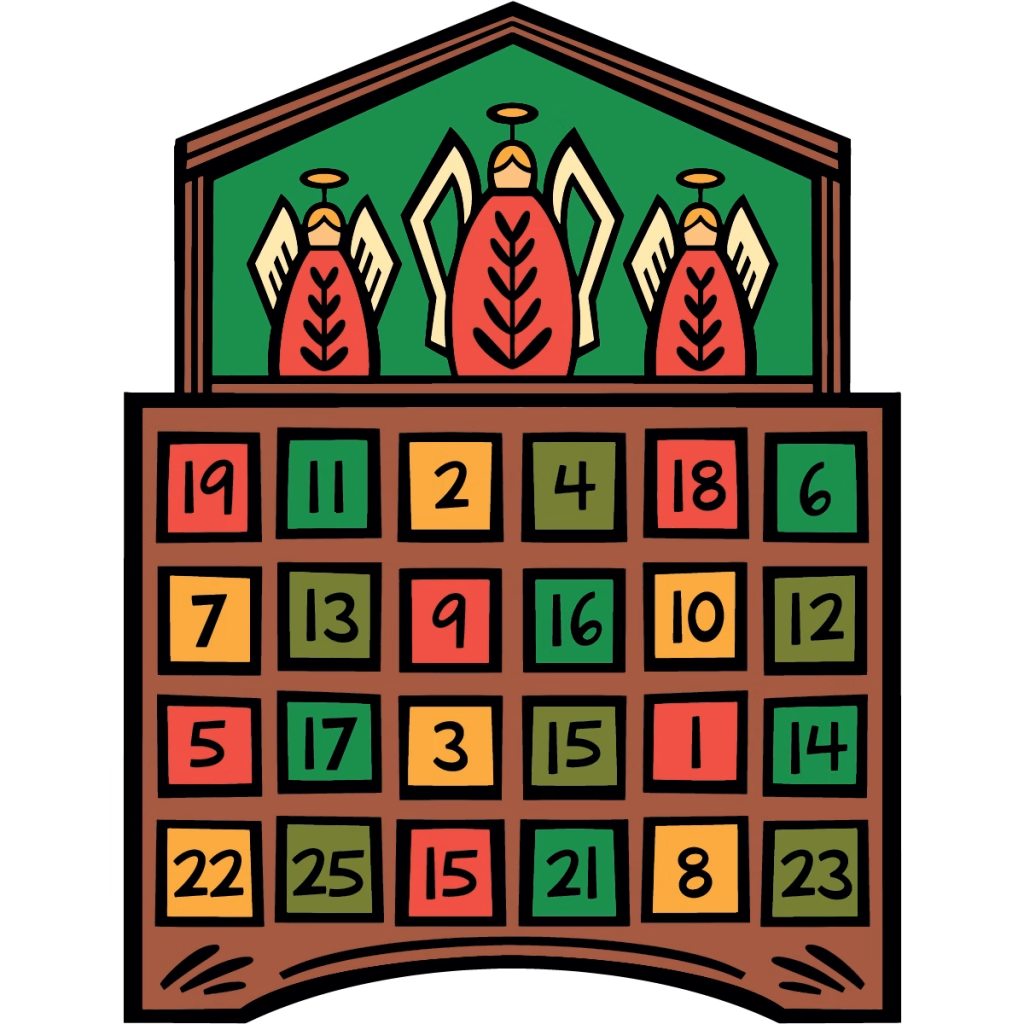
The Advent calendar counts down the days to Christmas, one small surprise at a time. History UK notes that Munich printer Gerhard Lang is generally credited with the first printed version in 1908, inspired by the 24 sweets his mother stuck to a board for him as a child. Doors came later, and chocolate fillings followed by the 1950s.
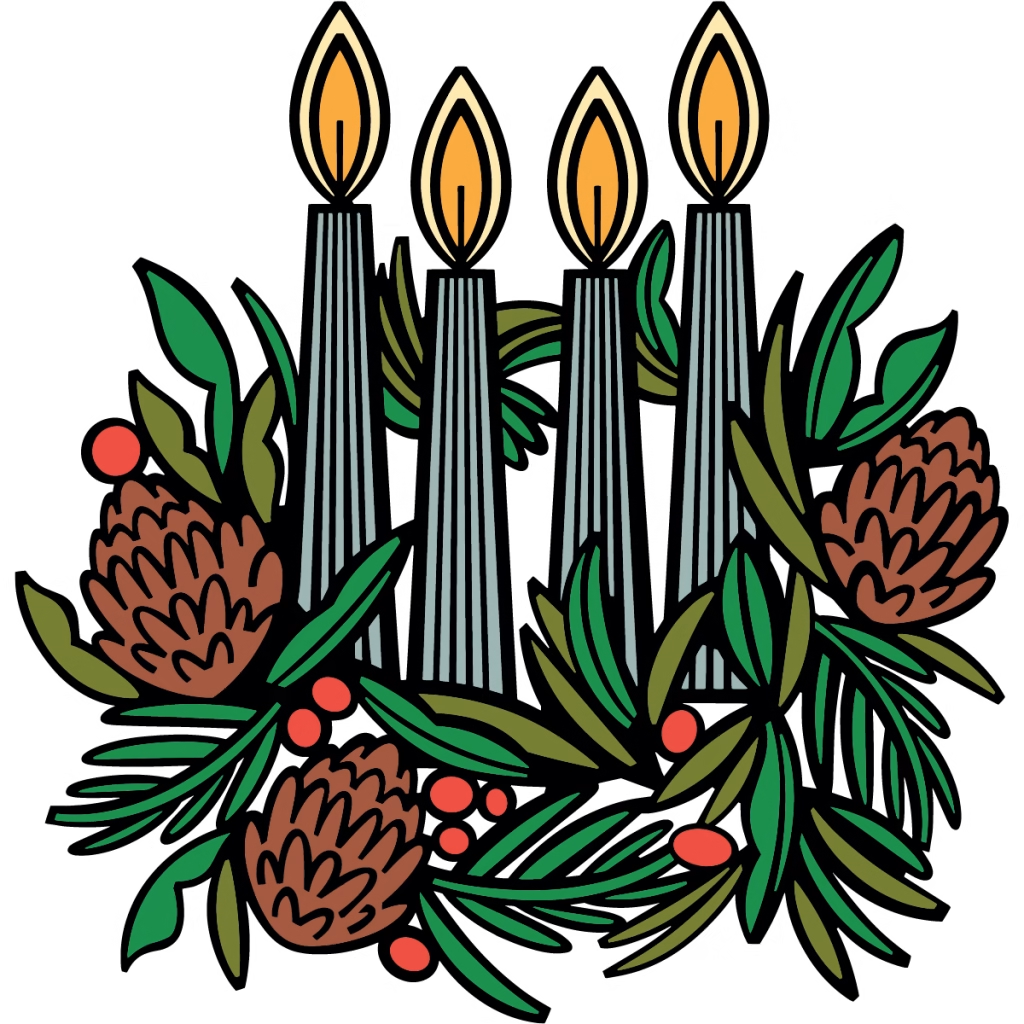
The Advent wreath began in 1839 at the Rauhes Haus, a Hamburg home for disadvantaged children. Pastor Johann Hinrich Wichern fixed candles to an old cartwheel so the children could see how many days remained until Christmas. As Hamburg Tourism explains, the original still glows there each year, while most homes now light four candles, one for each Sunday of Advent.
Nuremberg’s Christkindlesmarkt is one of the most famous Christmas markets in the world. The official market chronicle points to a wooden box marked for the market of 1678 as its oldest surviving evidence. Each year it opens when the Christkind, or “Christ Child,” a gift-bringing figure in German tradition played by a young local woman elected to the role, gives an opening speech from the balcony of the Frauenkirche, the city’s Church of Our Lady. Many German Christmas markets, including those in Cologne and Stuttgart, also set up open-air ice rinks among the stalls, as Planetware notes.
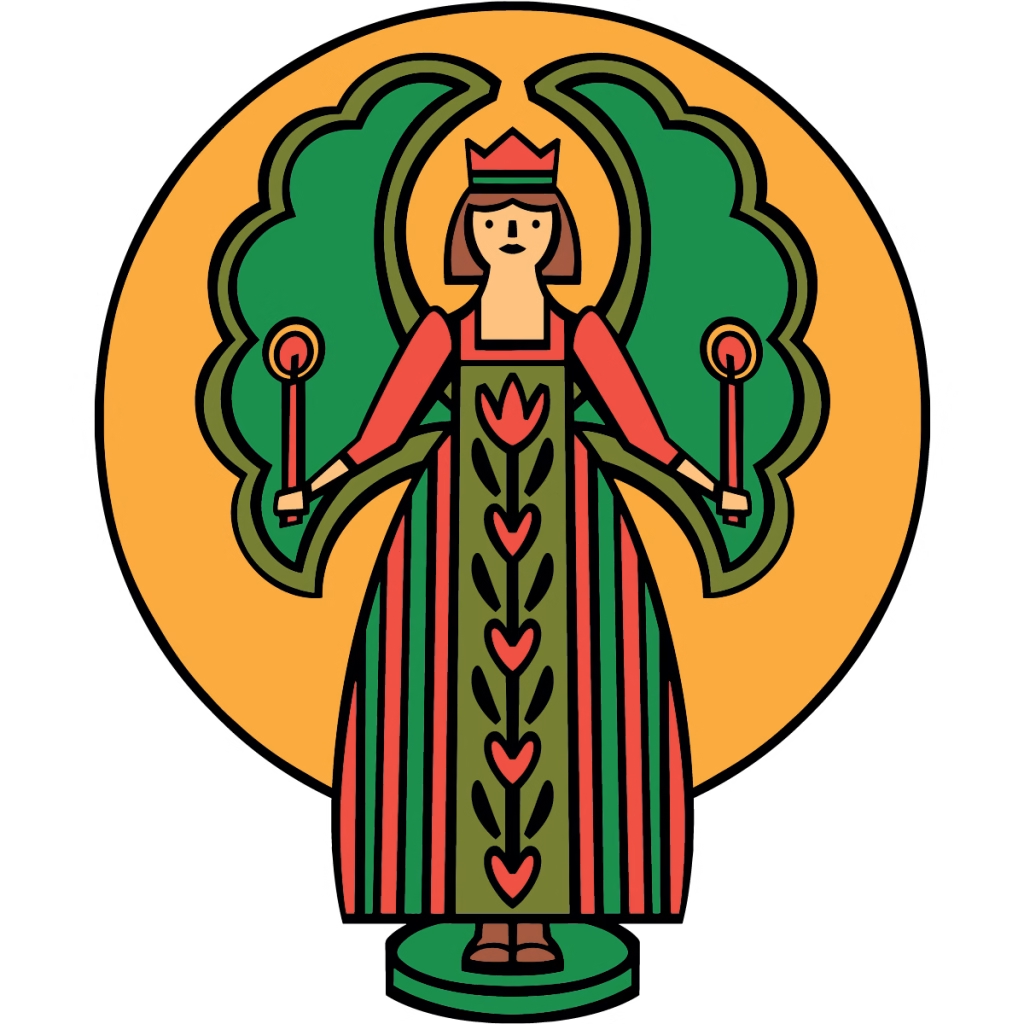
Nuremberg’s Rauschgoldengel, or “gold foil angel,” is the city’s signature Christmas angel. Its name comes from Rauschgold, a paper-thin brass foil once made by the city’s metalworkers that looks like gold and rustles when it moves. The Christkindlesmarkt calls it a golden ambassador of Christmas and today it is sold in sizes from tiny ornaments to tree toppers.
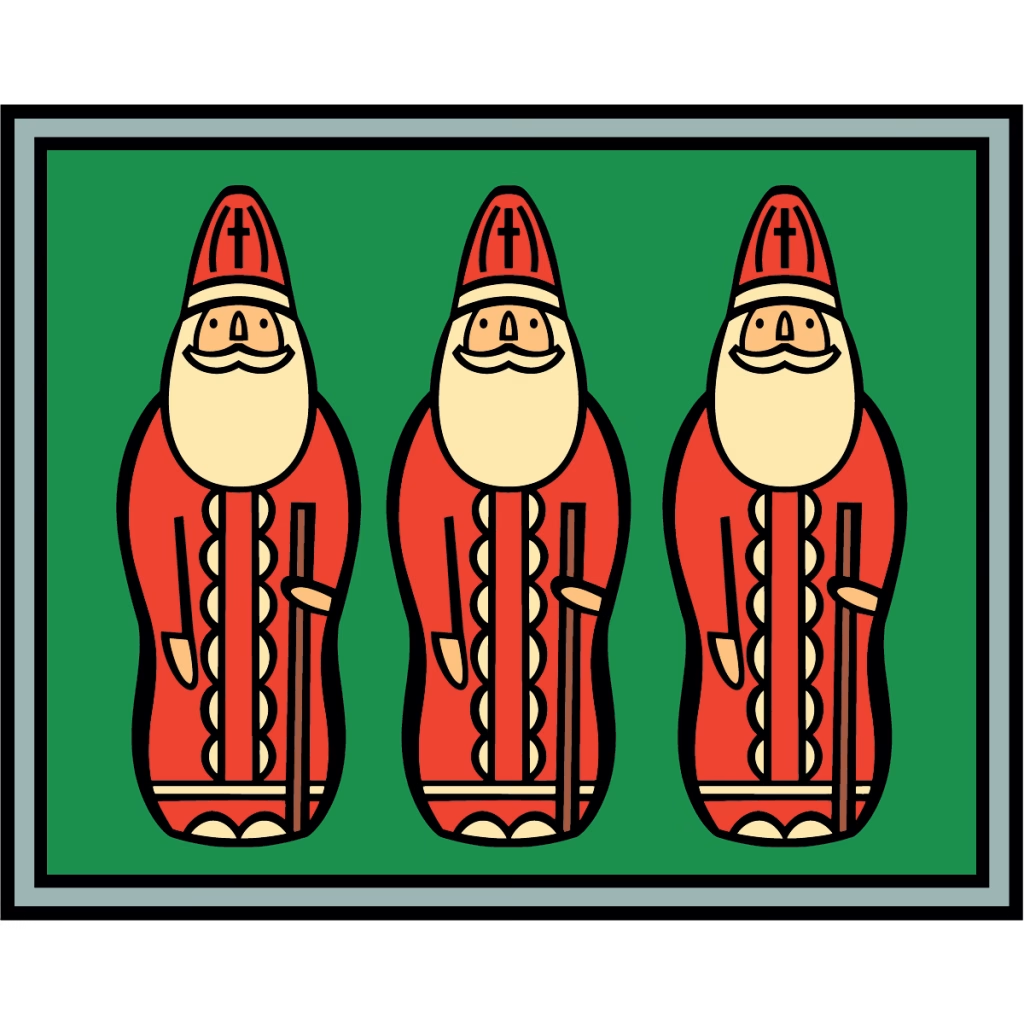
The gift-giving bishop Saint Nicholas sits at the root of Santa Claus. Sinterklaas is his Dutch name, and the one that reached America as “Santa Claus.” In Germany he goes by Nikolaus, who visits on the night of December 5 and fills children’s boots by morning. As The Local reports, he is a separate figure from the Weihnachtsmann, or “Christmas Man,” a Santa-like figure who brings gifts on Christmas Eve.
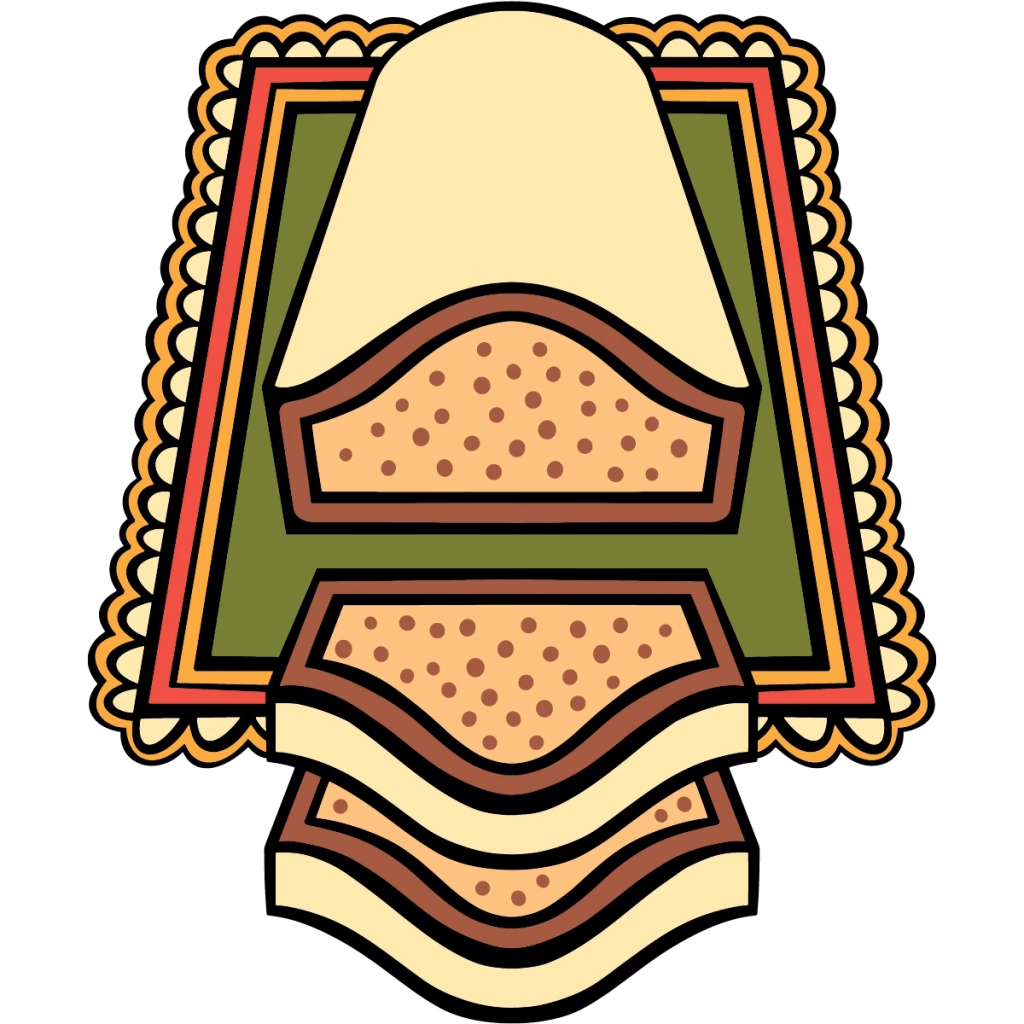
Stollen is a dense, butter-rich loaf packed with dried fruit and dusted with powdered sugar, said to resemble the swaddled Christ child. In the 1400s, Advent fasting rules banned butter, and bakers had to petition the Church for an exception. Dresden’s version is so prized that the European Union protects the name “Dresdner Christstollen” as a regional specialty.
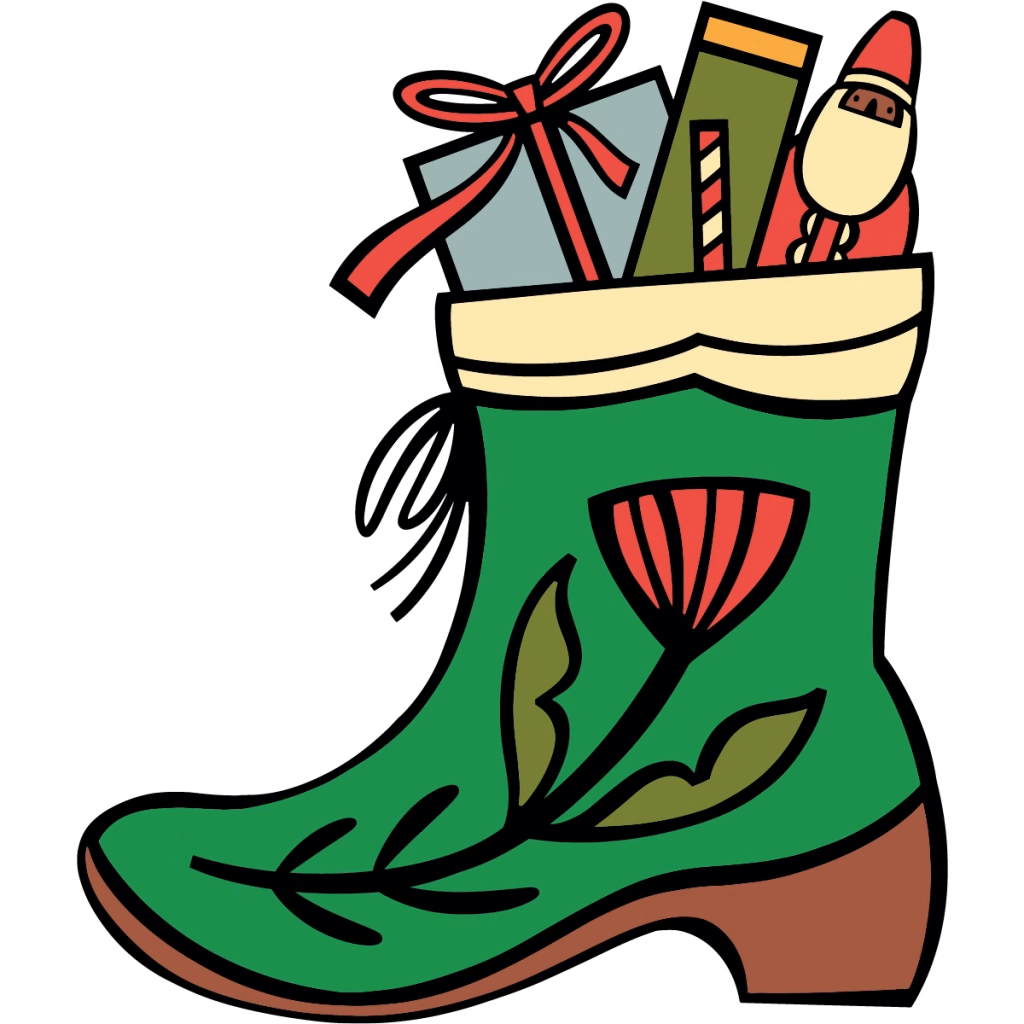
On the evening of December 5, German children polish their boots and set them outside the door. By morning on Nikolaustag, December 6, Saint Nicholas has filled them with chocolate, nuts, oranges or small gifts for children who behaved. The custom, CIEE explains, echoes the saint’s reputation for leaving secret gifts in people’s shoes.
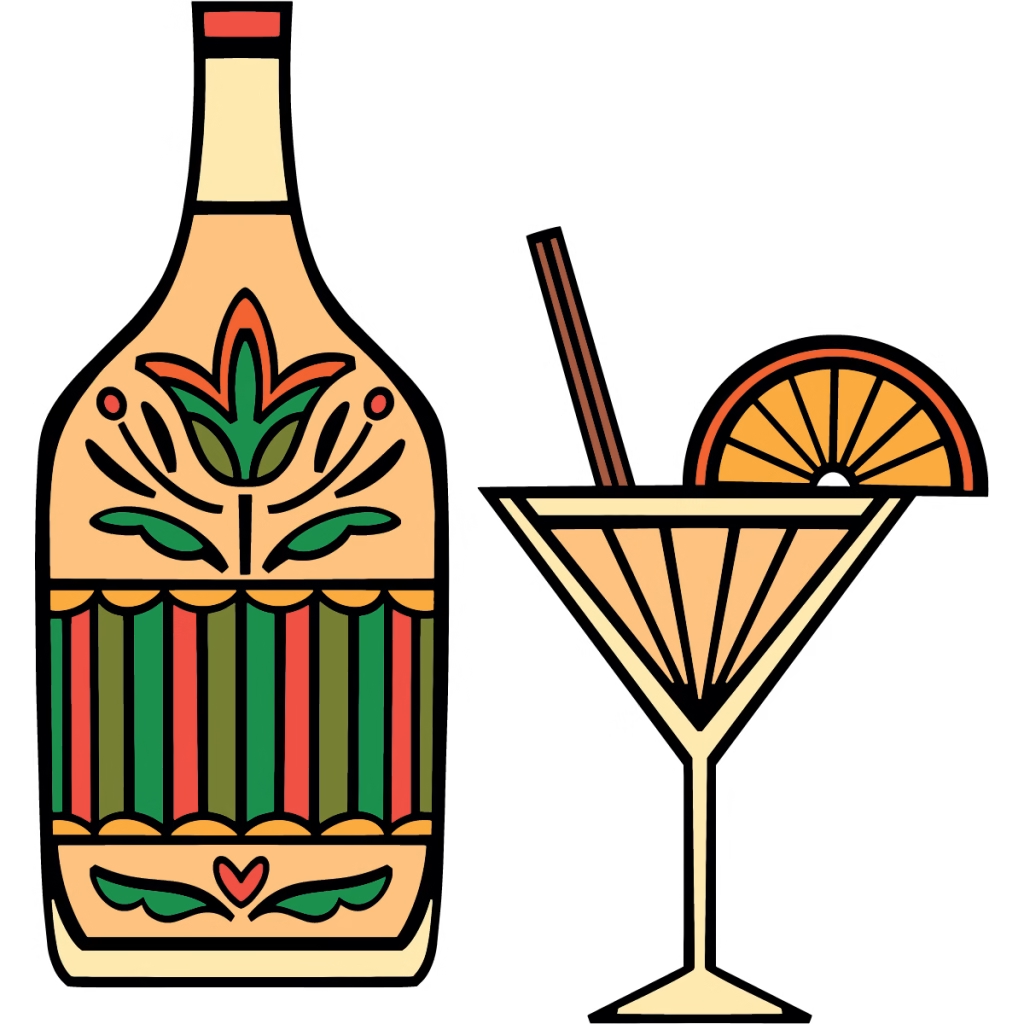
Eierpunsch is Germany’s warm, creamy answer to eggnog. Instead of milk, it blends egg yolks, sugar and vanilla with white wine, then heats the mix gently so the eggs don’t cook. It is a staple at Christmas markets in Germany and Austria, often topped with whipped cream, and The Local counts it among the classic market drinks for warming up.
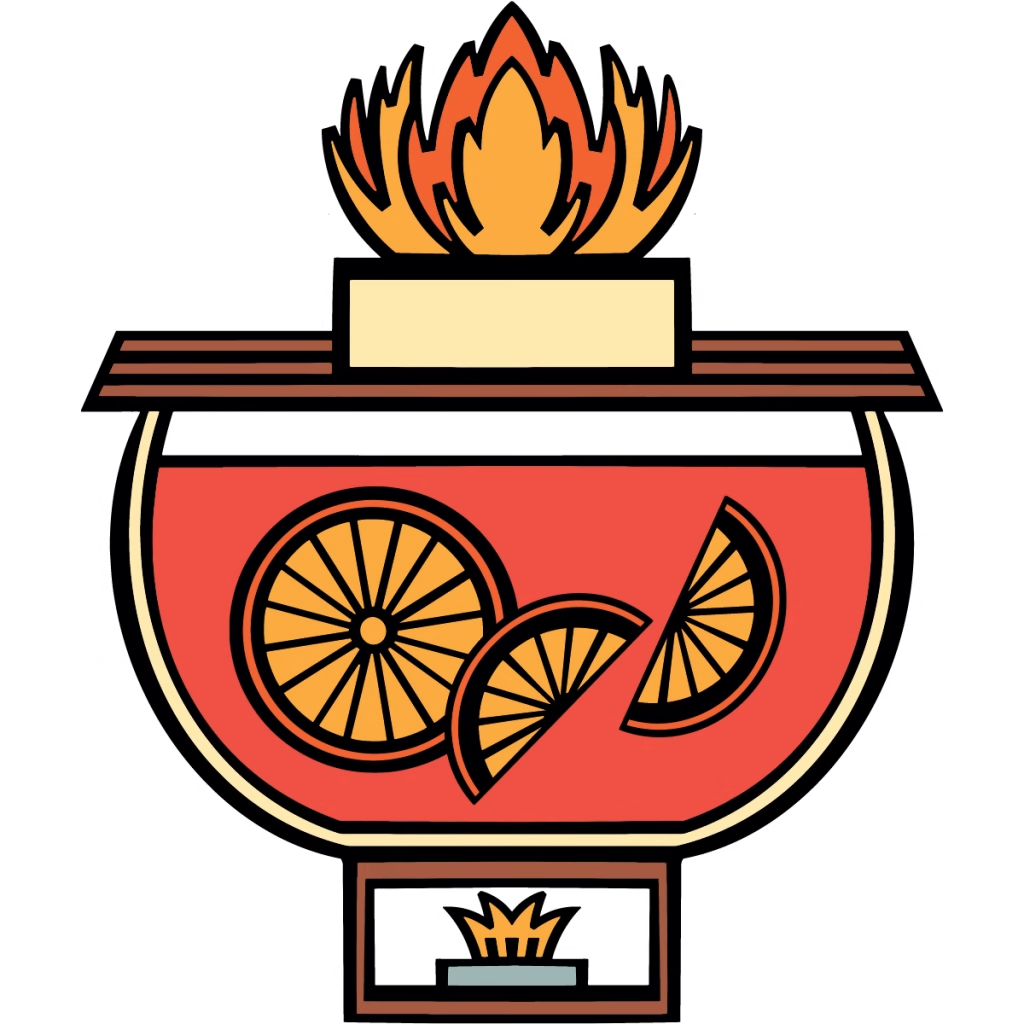
Feuerzangenbowle turns mulled wine into a small spectacle. A rum-soaked sugarloaf rests on metal tongs over the bowl and is set alight so the caramelized sugar drips into the wine below. Alimentarium notes its popularity grew after the 1944 comedy Die Feuerzangenbowle, which became a cult classic for generations of German students.
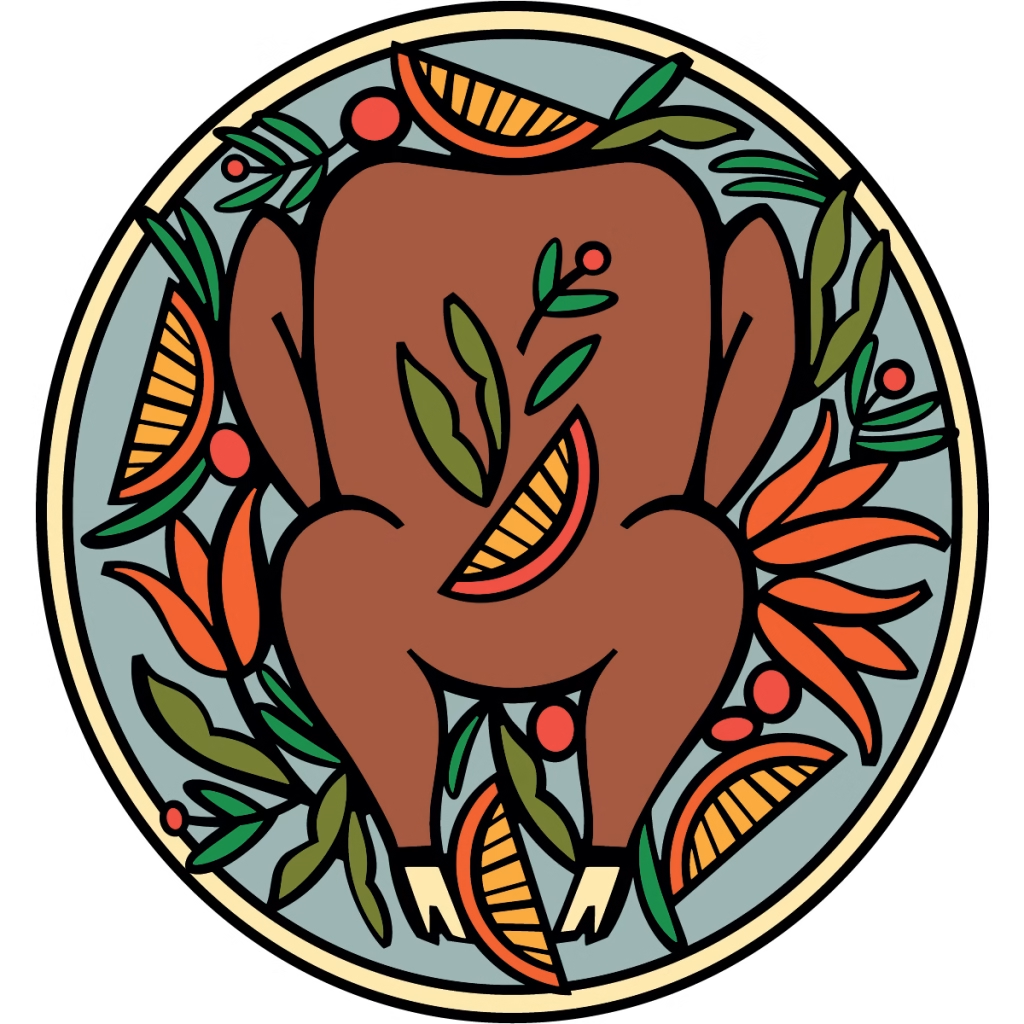
Roast goose is the centerpiece of many German Christmas dinners, usually served with red cabbage and potato dumplings and often stuffed with apples, chestnuts and dried plums. The dish has roots in the Martinsgans, or “Martin’s goose,” traditionally eaten on St. Martin’s Day, November 11, a feast honoring a fourth-century saint. The Local reports that most of the geese eaten in Germany each year are served at Christmas.
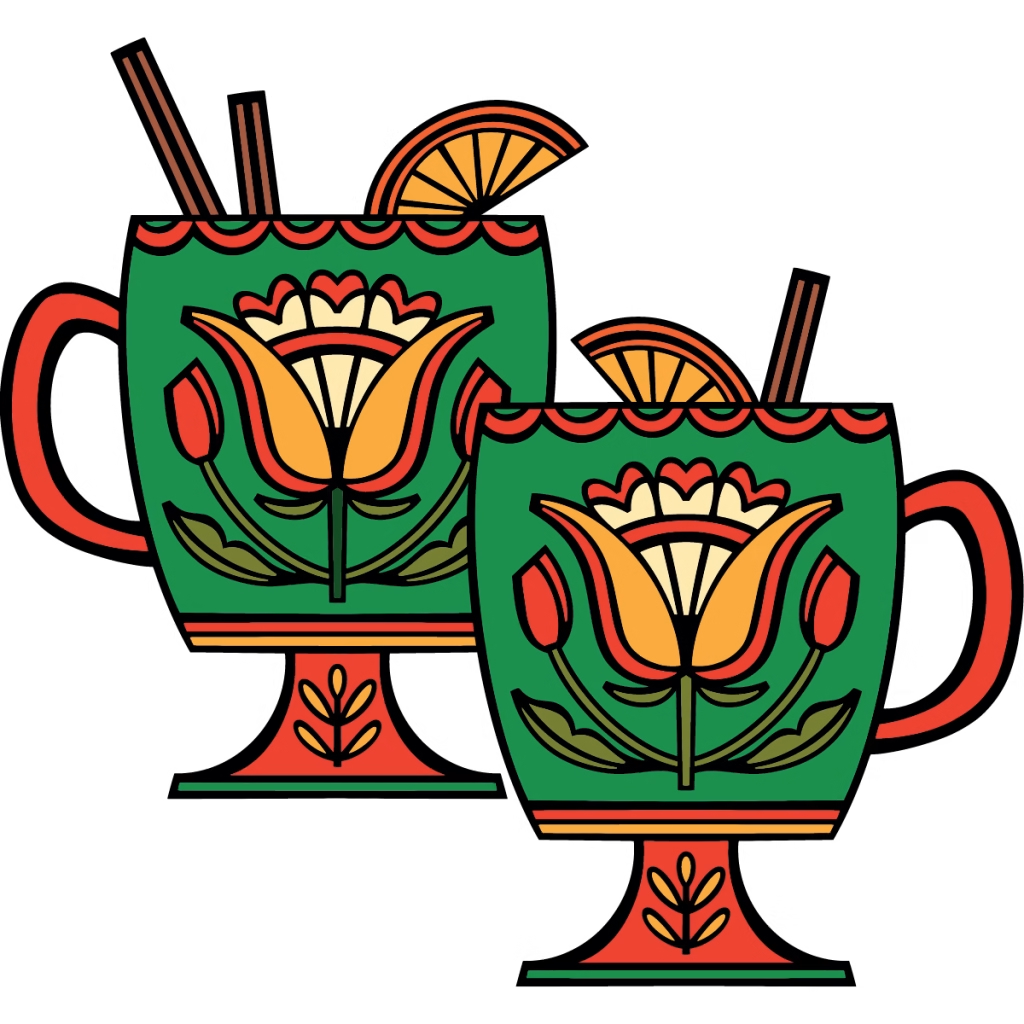
Glühwein, or “glow wine,” is red wine heated with cinnamon, cloves, citrus and sugar, and its scent defines a German Christmas market. Spiced, heated wine goes back to ancient Rome, but the oldest documented Glühwein tankard belonged to a German count around 1420. Many markets serve it in collectible mugs.

The many-pointed Herrnhuter Stern began in the 1800s at a boys’ school in the eastern German town of Niesky, most likely as a geometry lesson. The school was run by the Moravian Church, a Protestant denomination with roots in what is now the Czech Republic. A former student later began selling the stars, and his son founded a star factory in nearby Herrnhut, the town that gives the star its German name. The Moravian star now hangs in homes and churches worldwide, including Moravian communities in Pennsylvania (like Lititz, where Addvent headquarters are) and North Carolina.
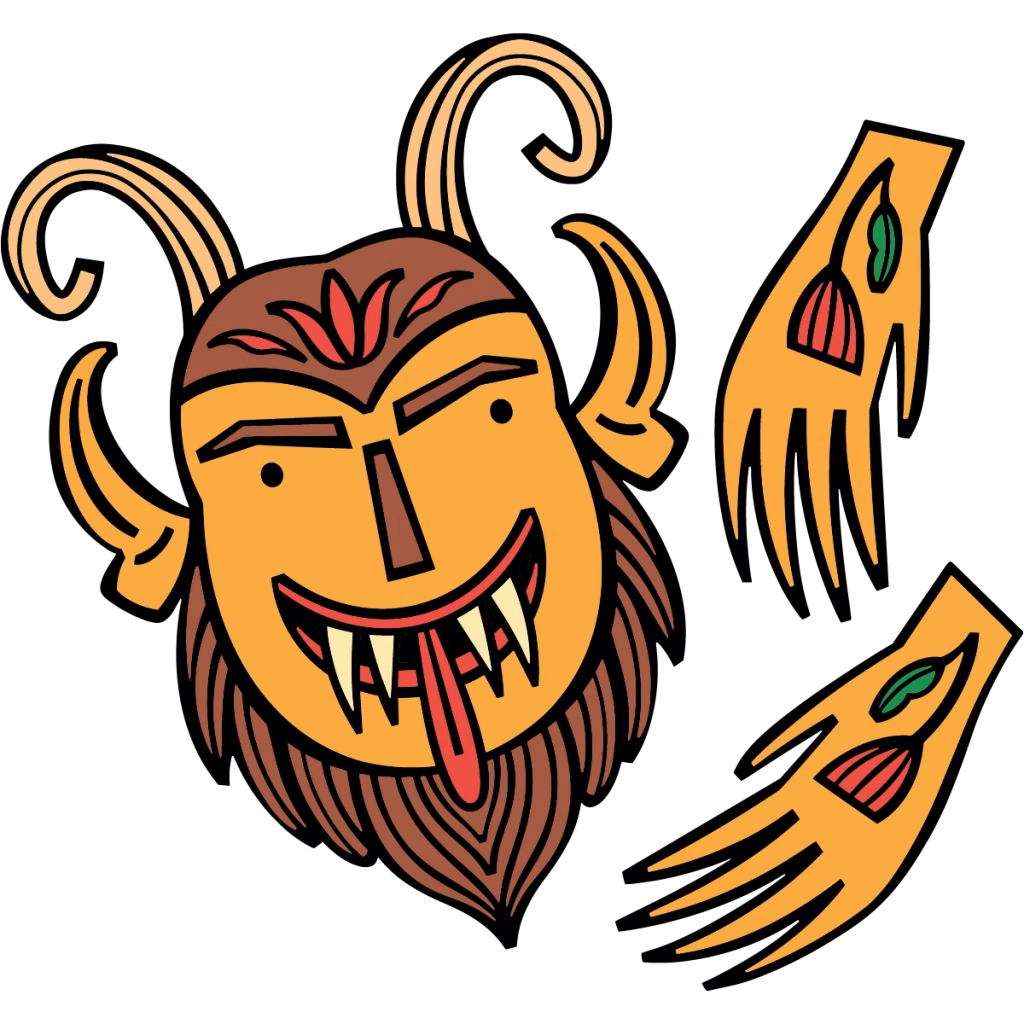
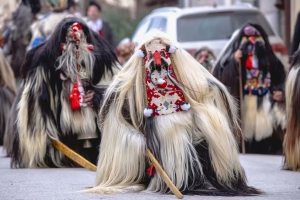
Krampus is the horned, shaggy companion of Saint Nicholas in the folklore of the Alps, sent to frighten children who misbehaved. On Krampusnacht, the night of December 5, costumed figures with bells and chains parade through towns in Austria and Bavaria, in southern Germany. Some families also get a home visit from the pair. Nicholas asks the children if they’ve been good and rewards them with small gifts, while Krampus, carrying a rod, is there as a warning to behave.
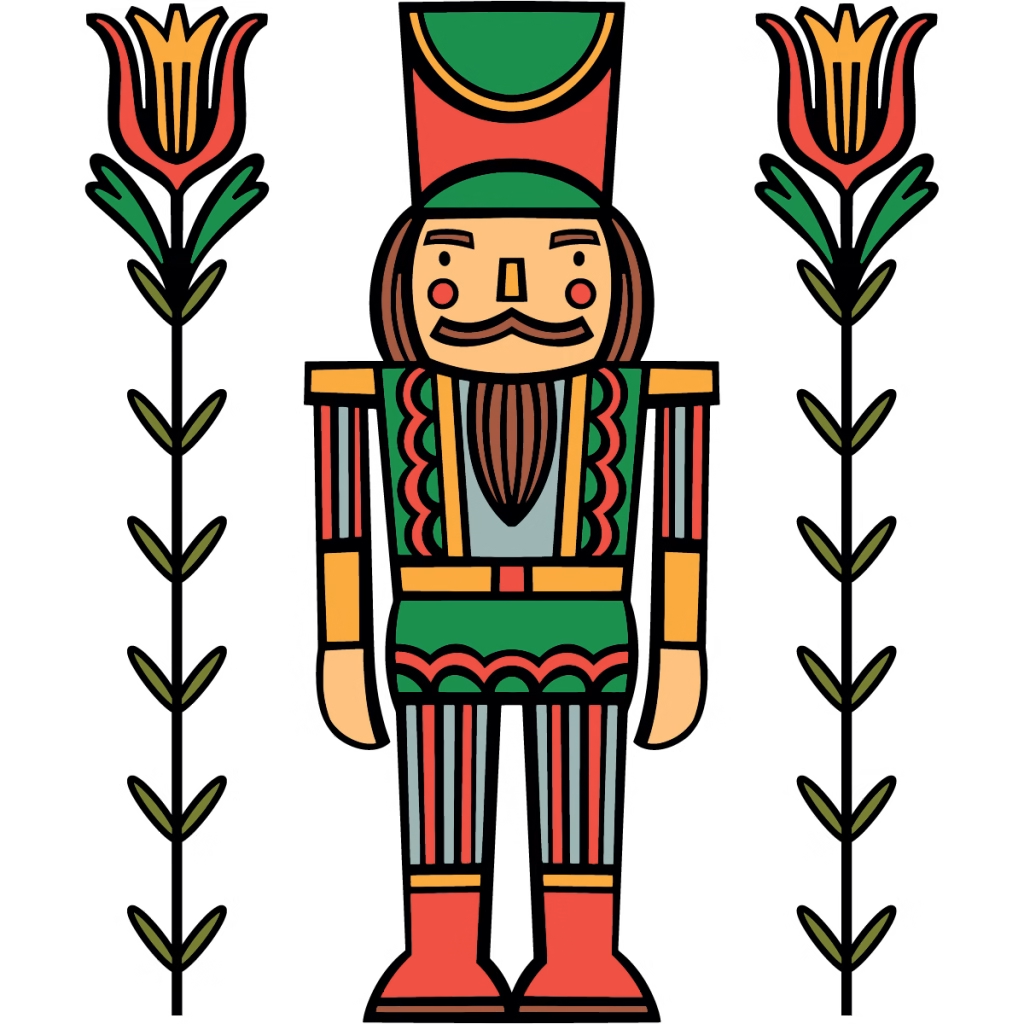
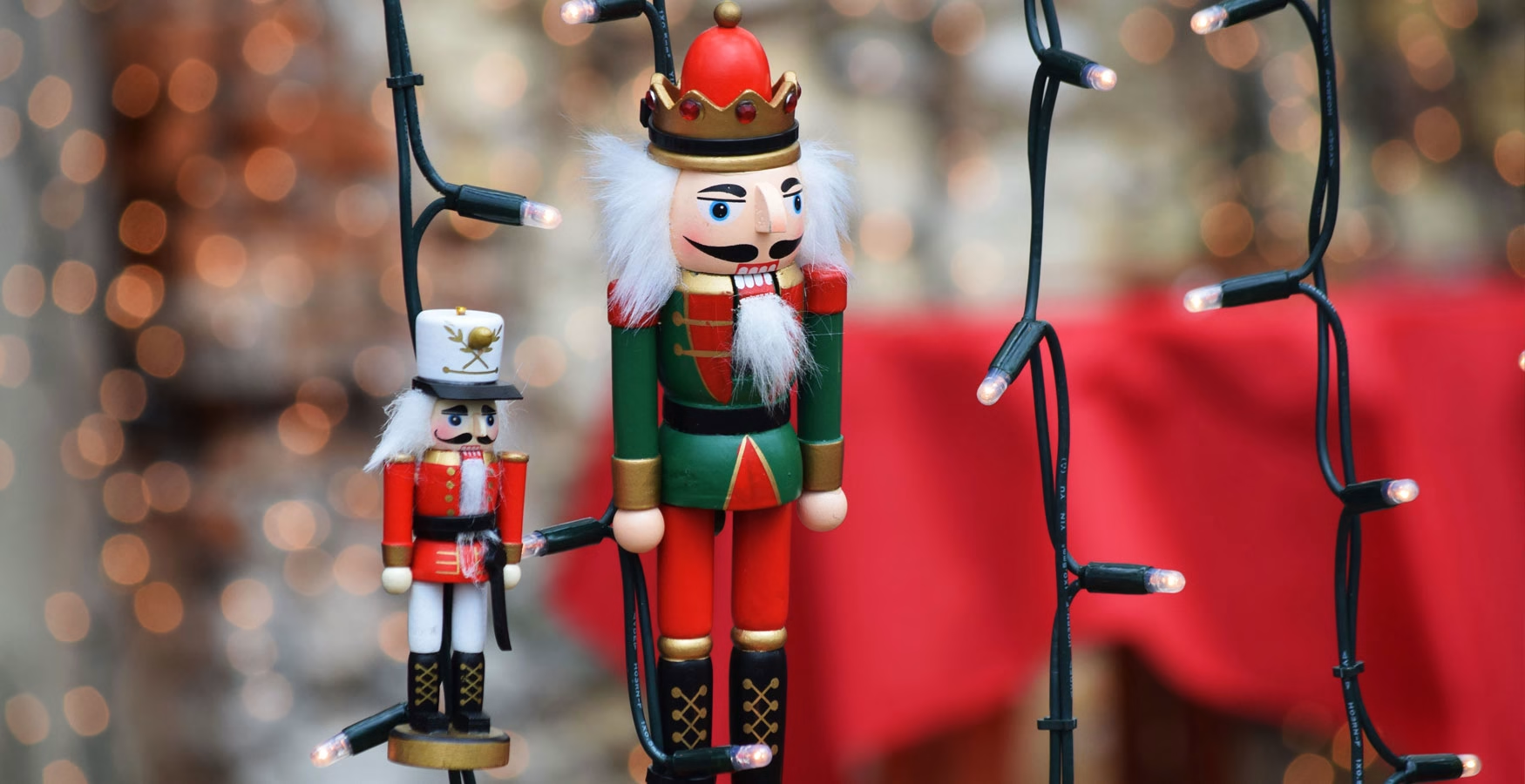
The carved soldier nutcracker comes from the Erzgebirge, or Ore Mountains, a mining region along Germany’s border with the Czech Republic. As mining declined, villagers turned to woodworking, and around 1870 Wilhelm Füchtner of Seiffen began making nutcrackers on a lathe, a machine that spins wood so it can be shaped into rounded pieces. Seiffen’s official site still celebrates the craft, and the Füchtner family continues making them in the village today.
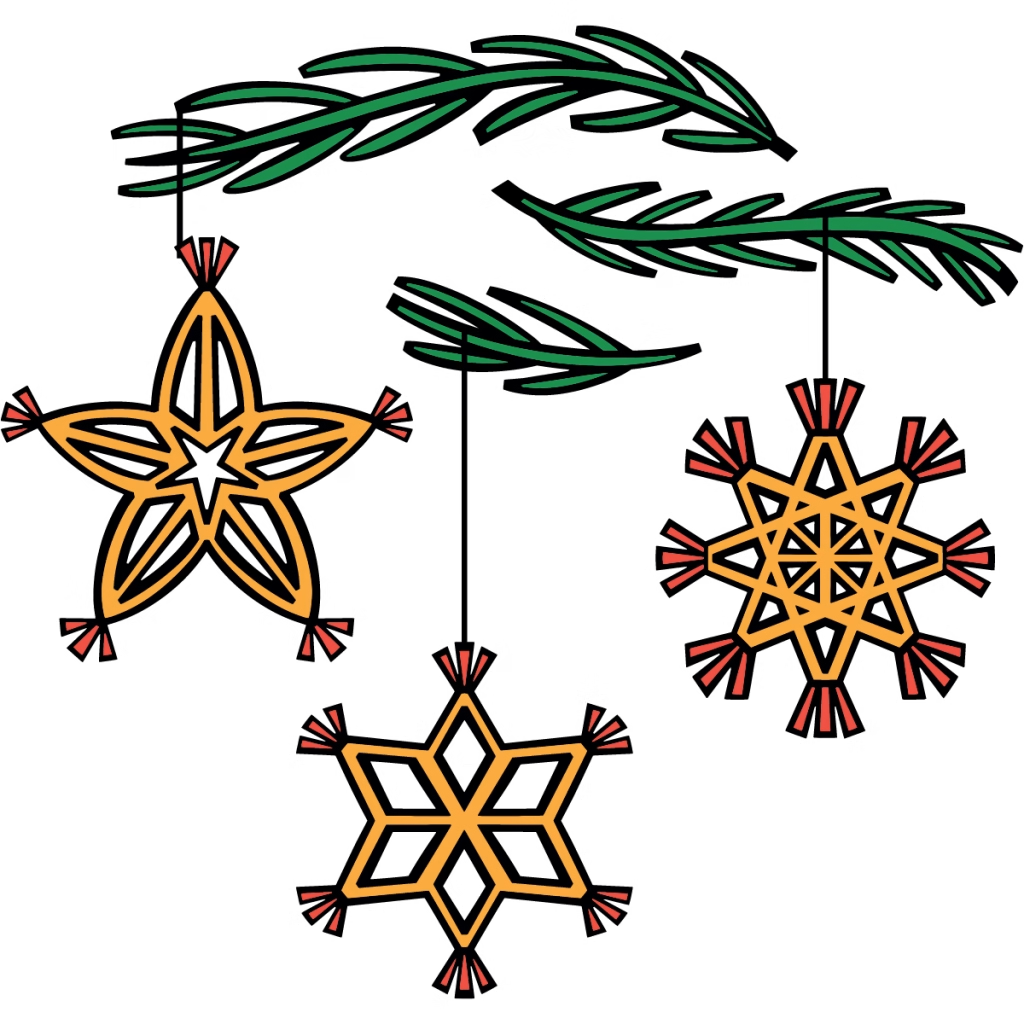
Strohsterne are delicate stars made by binding or weaving strands of wheat straw into geometric patterns. Simple to make and lovely on a tree, they are a classic homemade German ornament and a favorite Advent craft for families. More Than Beer and Schnitzel lists them among Germany’s traditional Christmas stars, which recall the Star of Bethlehem.
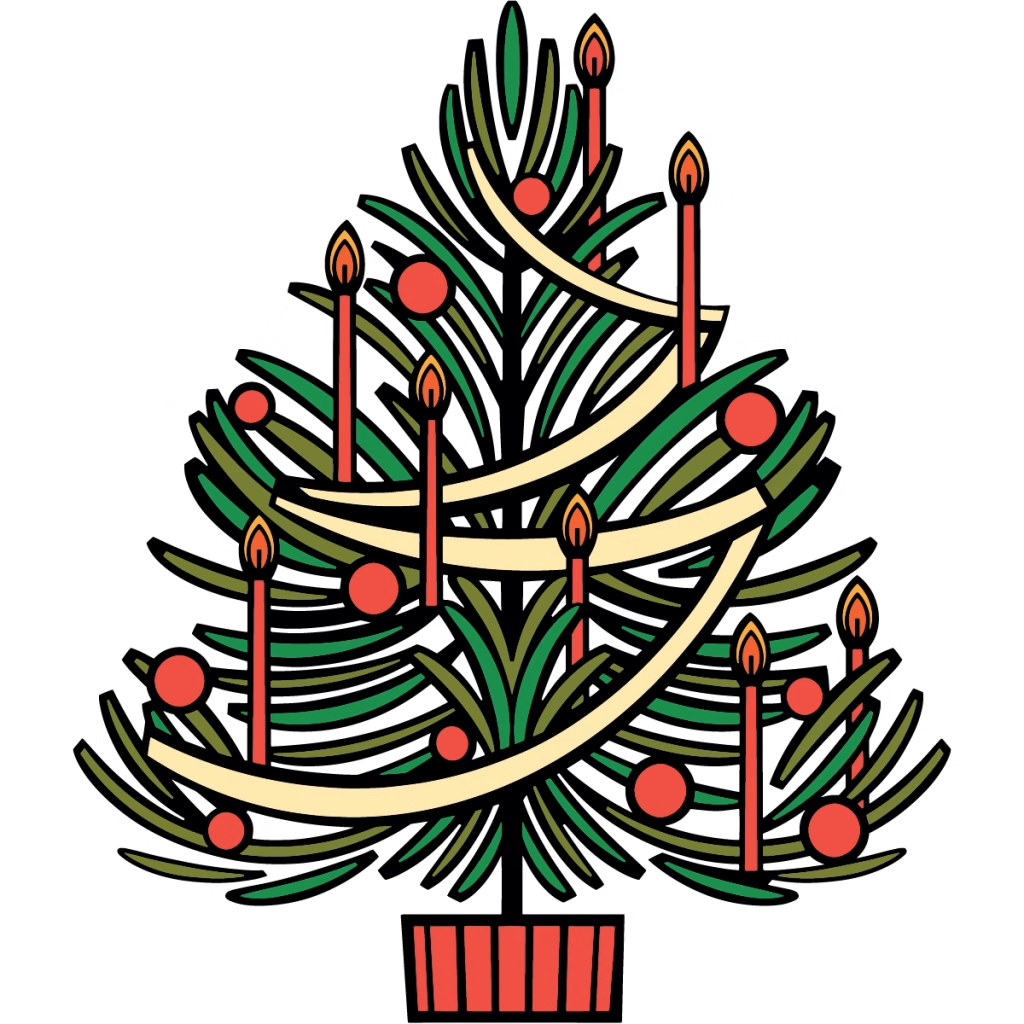
The decorated evergreen is Germany’s best-known gift to Christmas. Records from the 1500s describe trees decorated in Alsace, a region now part of northeastern France, and other German-speaking areas, and German immigrants later carried the custom to America. The Deseret News traces how an 1850 image of Queen Victoria and Prince Albert around their tree helped make it popular in American homes.
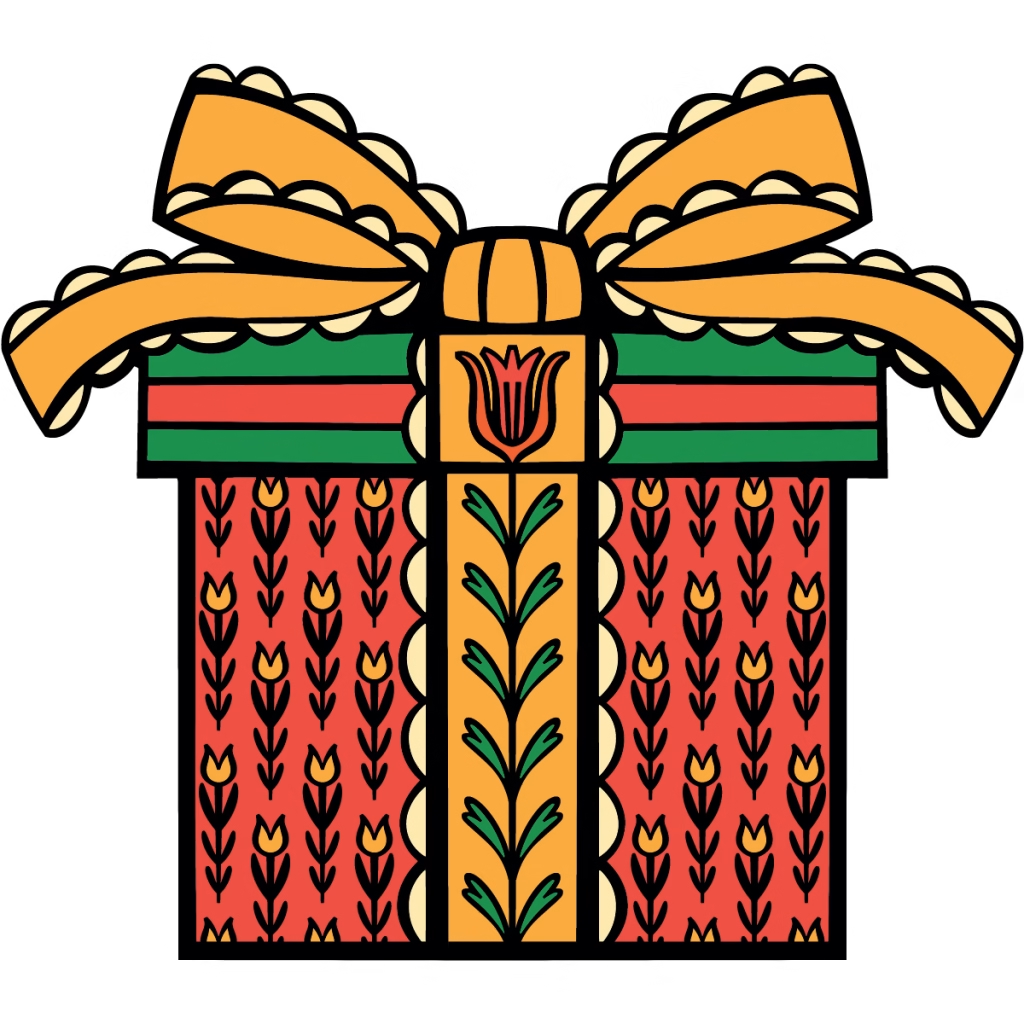
In Germany, gifts are opened on Christmas Eve, not Christmas morning. The gift-giving moment is called the Bescherung, when families gather around the tree, often after a bell signals that the presents have arrived. In many Catholic regions the Christkind, a childlike figure representing the Christ Child, brings the gifts, while Protestant areas more often credit the Santa-like Weihnachtsmann.
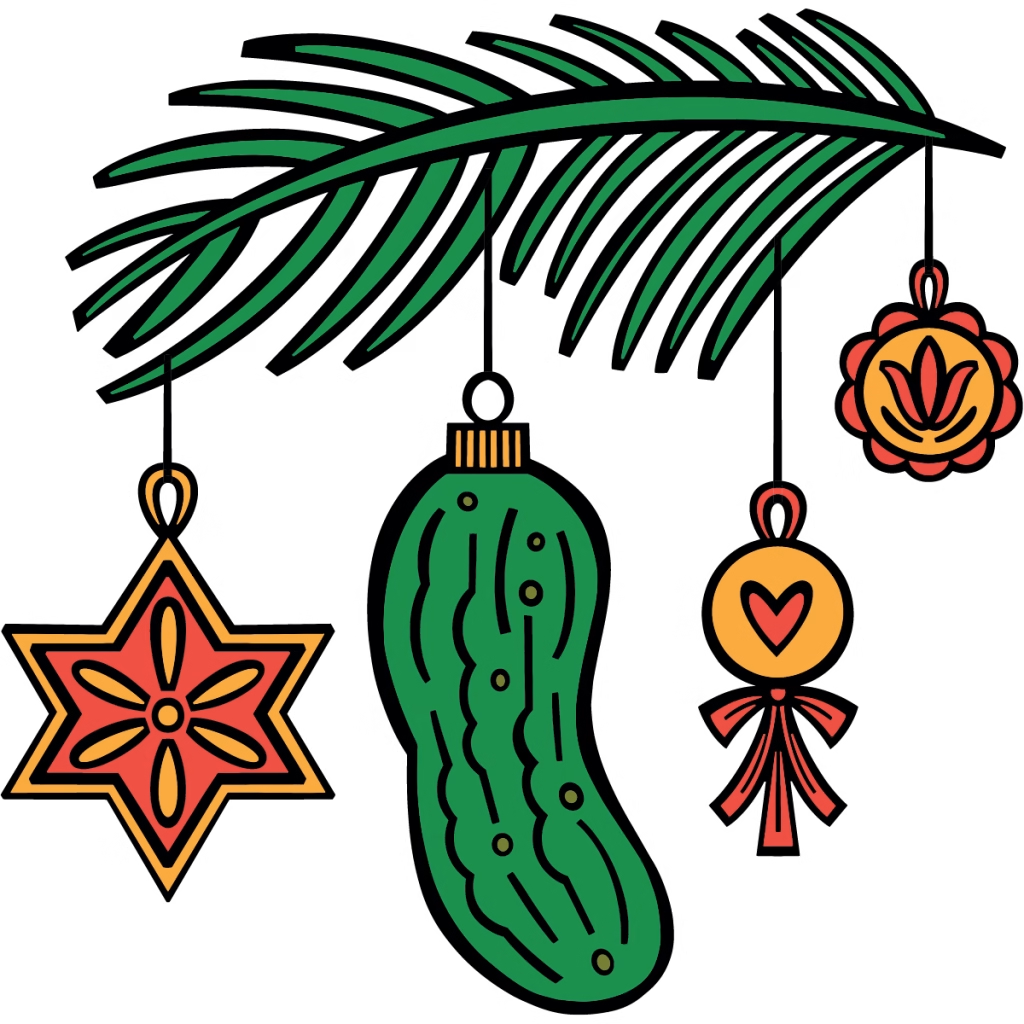
As the story goes, a glass pickle ornament is hidden deep in the tree on Christmas Eve, and whoever finds it first gets an extra gift or a year of good luck. Legends credit everything from a Bavarian-born Civil War soldier to Saint Nicholas himself. The ornament does have real German roots: glassblowers in Lauscha, a small town in central Germany, began making fruit- and nut-shaped glass ornaments in 1847, and Homes and Antiques notes that F. W. Woolworth began importing them to America in 1879. But retailers may have spun a German backstory to sell quirkier shapes like the pickle. Atlas Obscura notes the custom is far better known in America than in Germany, but the hunt is half the fun.
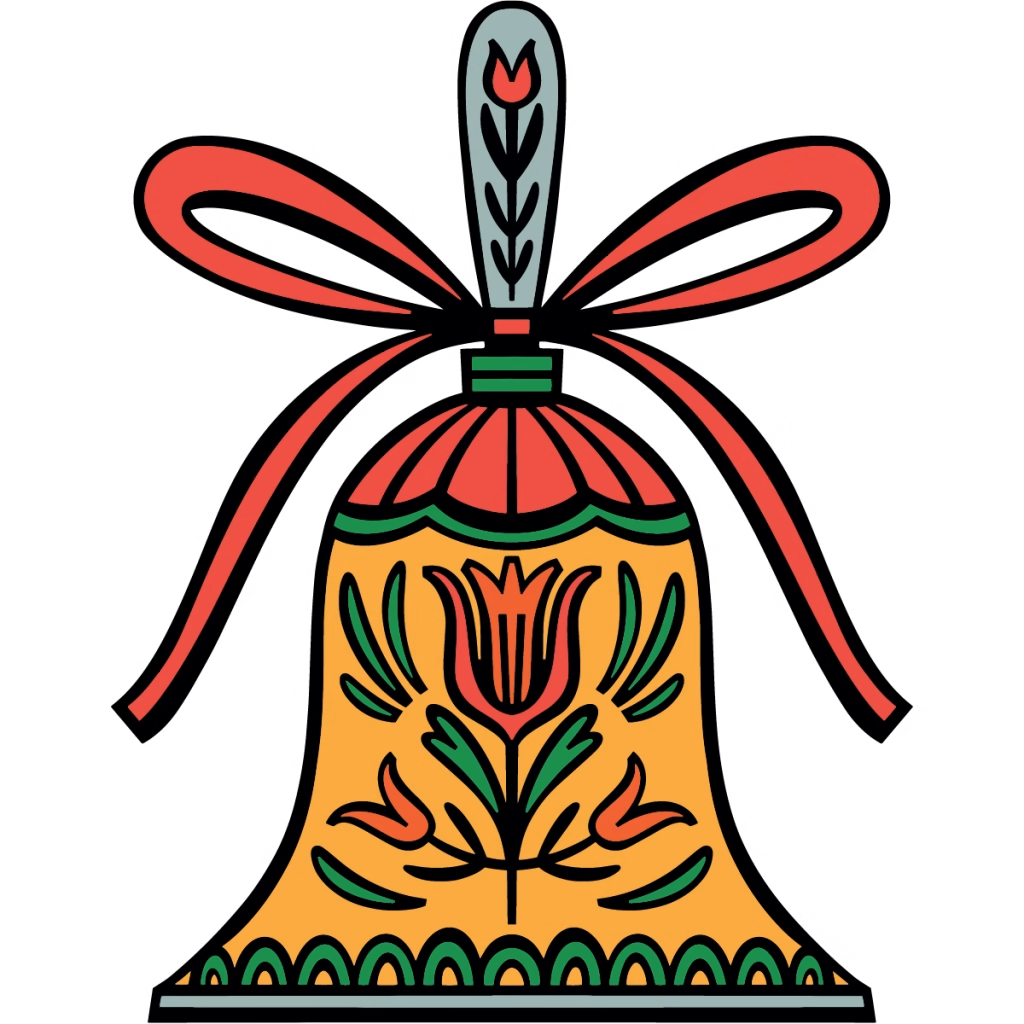
Bells carry a lot of meaning at a German Christmas. On Christmas Eve, church bells call families to evening services, and at home a small bell often signals that the Christkind has come and the gift room is open. In Berchtesgaden, an Alpine area in southeastern Germany, local tradition holds that bells “ring in” the Christkind starting December 17.
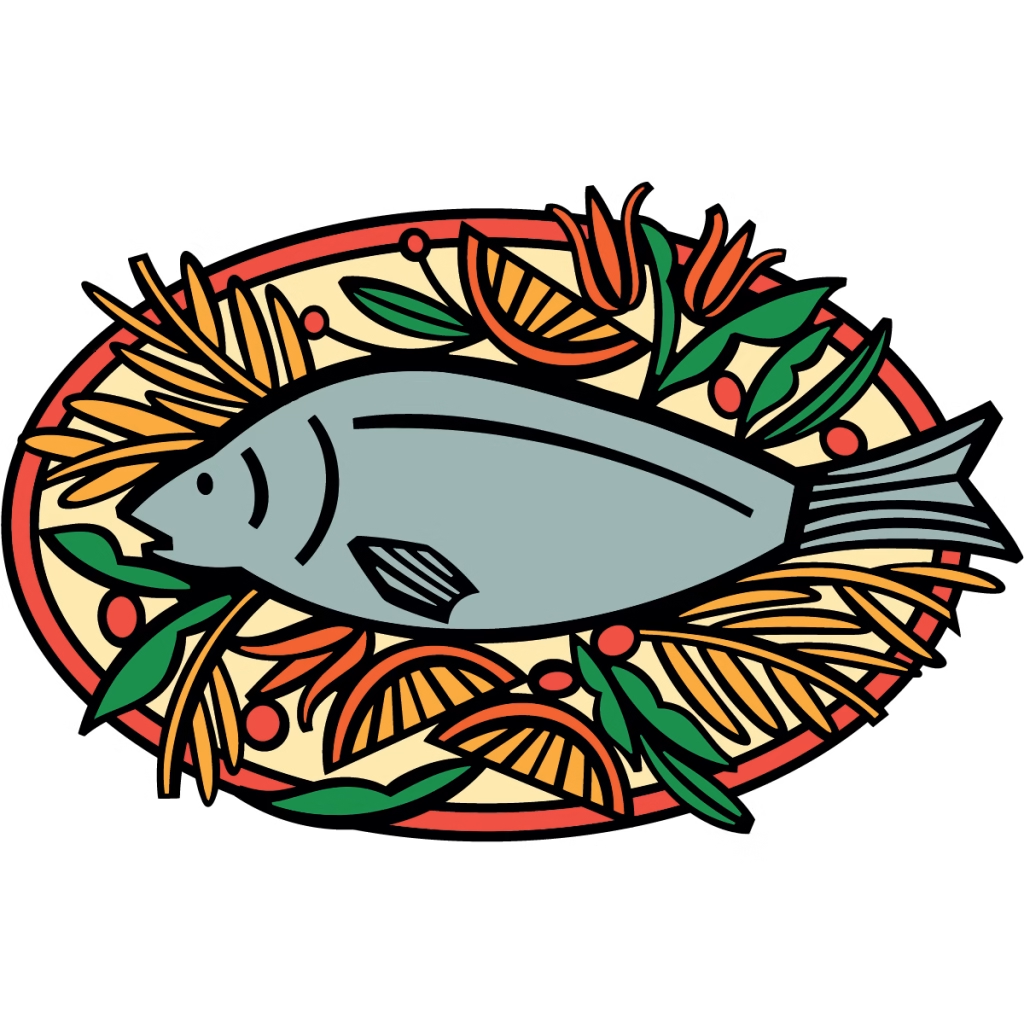
In parts of Germany, carp is the traditional Christmas Eve meal, a custom rooted in the old practice of fasting from meat before Christmas. It is often fried or served as Karpfen blau, or “blue carp,” cooked in a vinegar broth that turns the skin blue. Nuremberg’s tourism office shares a lucky twist: keep a scale from your Christmas carp in your wallet, and it is said to bring luck and prosperity all year.

Sending Christmas greetings by mail is a holiday staple in Germany, and German printing helped shape the American card. Louis Prang, who emigrated from Prussia after the revolutions of 1848, began printing Christmas cards in Boston in the 1870s. The Bates College Museum of Art recognizes him as the “father of the American Christmas card.”
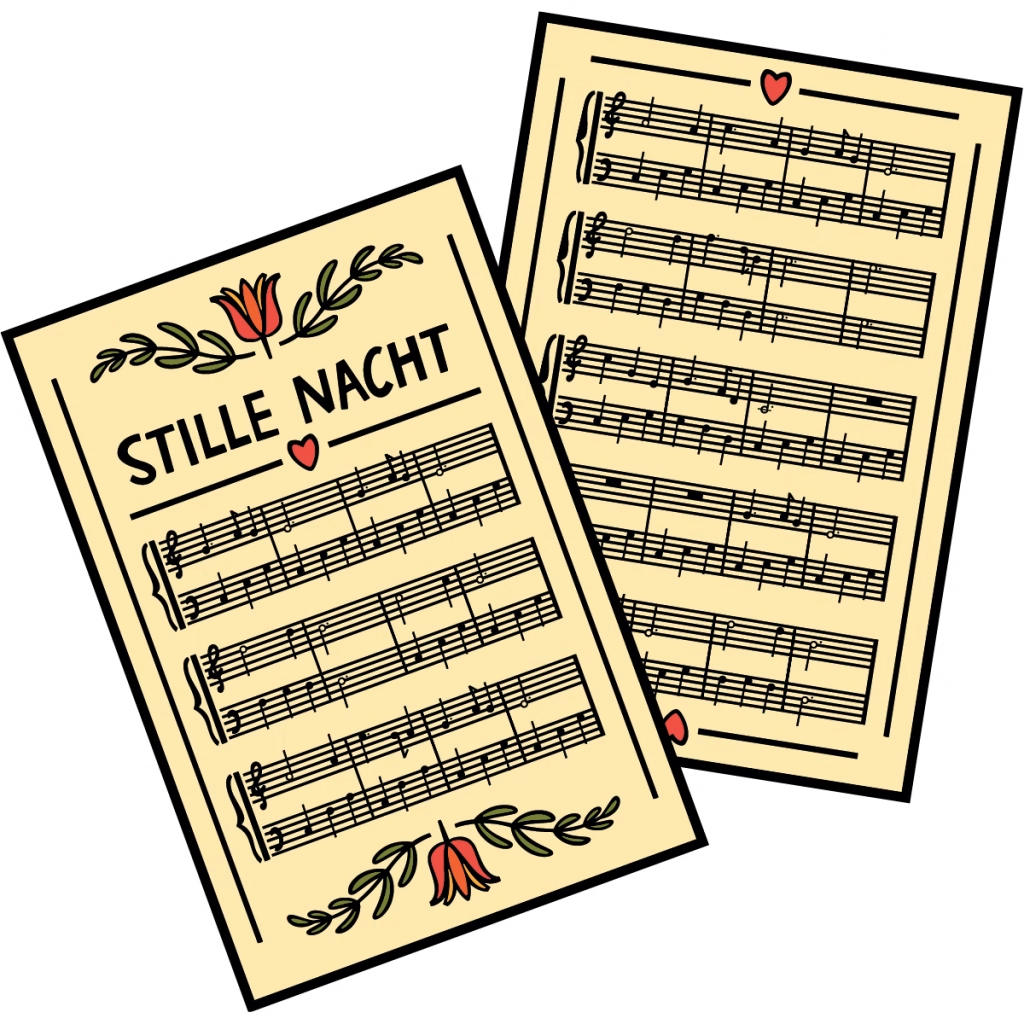
German-language carols are sung around the world. “O Tannenbaum” honors the evergreen tree, and “Stille Nacht” (“Silent Night”) was first performed on Christmas Eve 1818 in Oberndorf, just across the border in Austria. Western New York Catholic reports that a memorial chapel now stands at the site, drawing visitors from around the world each December.
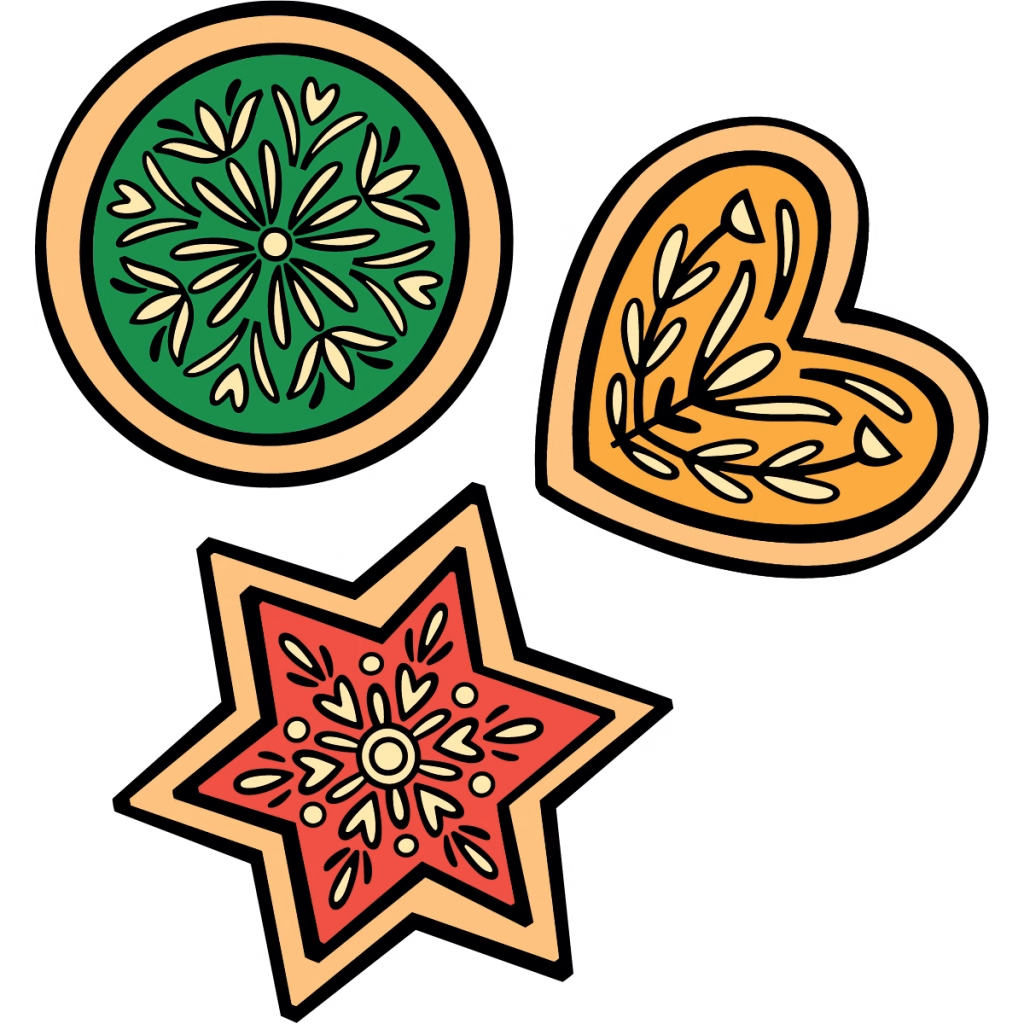
Baking Plätzchen, or cookies, is an Advent ritual in German homes, with tins of cookies set aside for guests all season. Favorites include Zimtsterne, star-shaped cinnamon and almond cookies with a white glaze; buttery cutout cookies; and Vanillekipferl, crescent-shaped nut cookies rolled in vanilla sugar. A 2022 survey for Germany’s food association, reported by Lebensmittel Praxis, found Vanillekipferl to be the country’s favorite Christmas cookie.
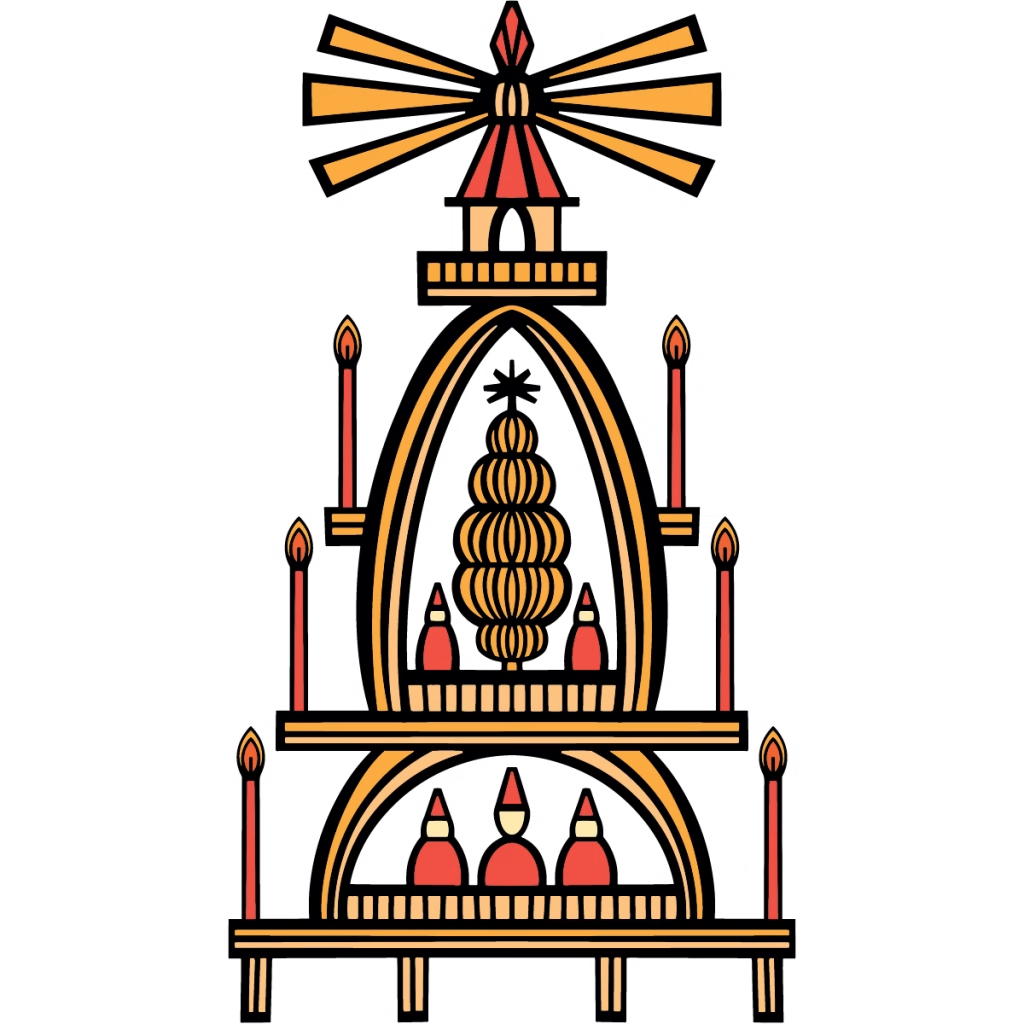
The Christmas pyramid is a tiered wooden carousel from the same Ore Mountains region as the nutcracker, where candle heat spins a propeller on top and turns carved scenes below. The design may echo the rotating machinery once used in the region’s mines. The Wooden Wagon notes that the tiered form was well established by the 1850s, and today some towns build giant outdoor versions.
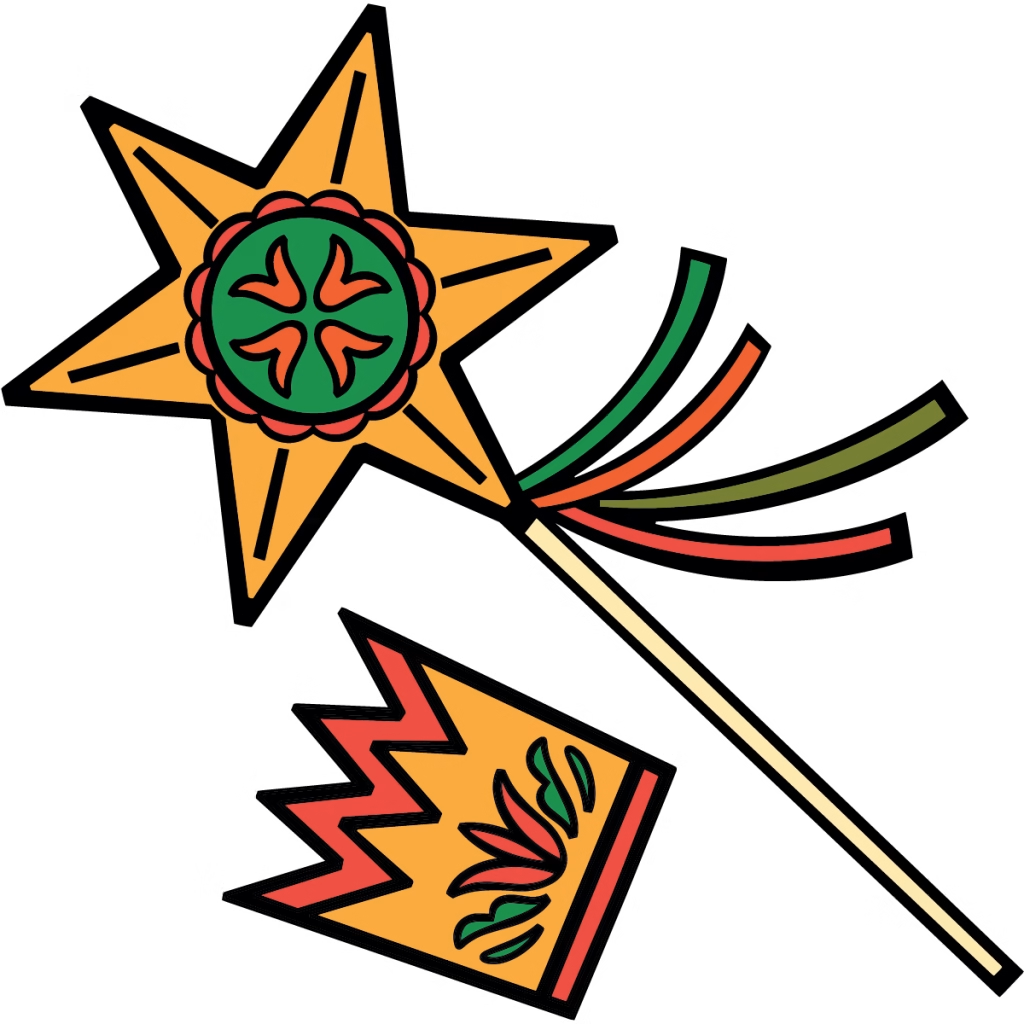
On January 6, Epiphany, a Christian feast day, marks the arrival of the Three Wise Men and the close of the Christmas season. In Catholic regions, children dressed as kings go door to door as Sternsinger, or star singers, collecting donations for children in need. They chalk a blessing such as “20+C+M+B+26” above each doorway. The letters stand for the kings’ traditional names, Caspar, Melchior and Balthasar, and for the Latin “Christus mansionem benedicat,” or “May Christ bless this house.”
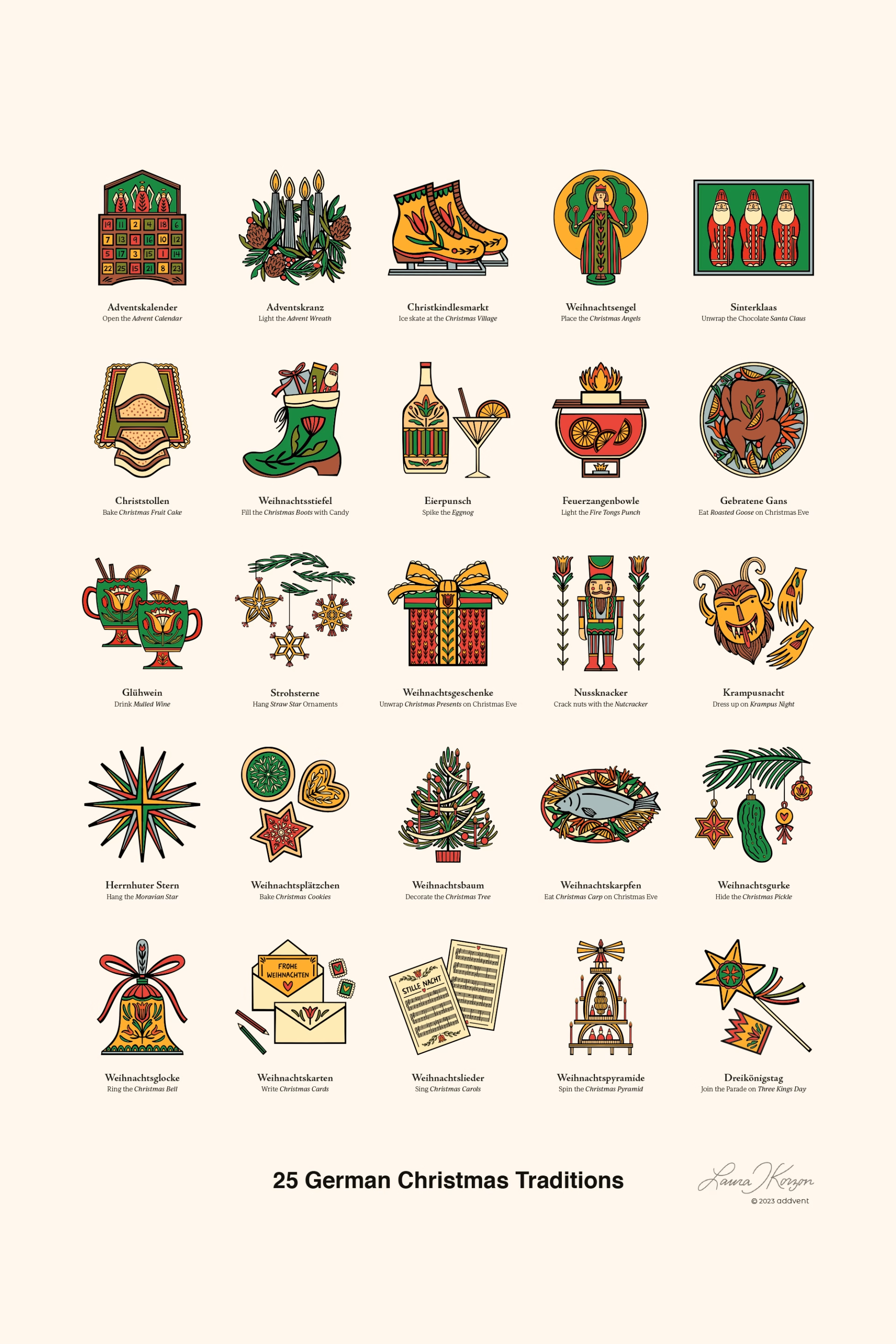
This collection of illustrations captures the warmth and craftsmanship of a German Christmas, from candlelit wreaths and spinning pyramids to steaming mugs of Glühwein and a well-hidden pickle. The vibrant palette and folk-inspired details are designed to feel like a holiday market in poster form. Which traditions already happen in your home, and which ones will you try this year?

READY TO EXPLORE?
Bake the Stollen, light the wreath, hunt for the pickle and work your way through all 25 German Christmas traditions, then celebrate with a German Christmas Traditions poster of your own.
These German Christmas prints make meaningful holiday gifts for anyone with German heritage, Christmas market lovers, families starting new traditions and collectors of festive, illustrated wall art.