19.07.2026
11 Ice Cream Types
from around the world




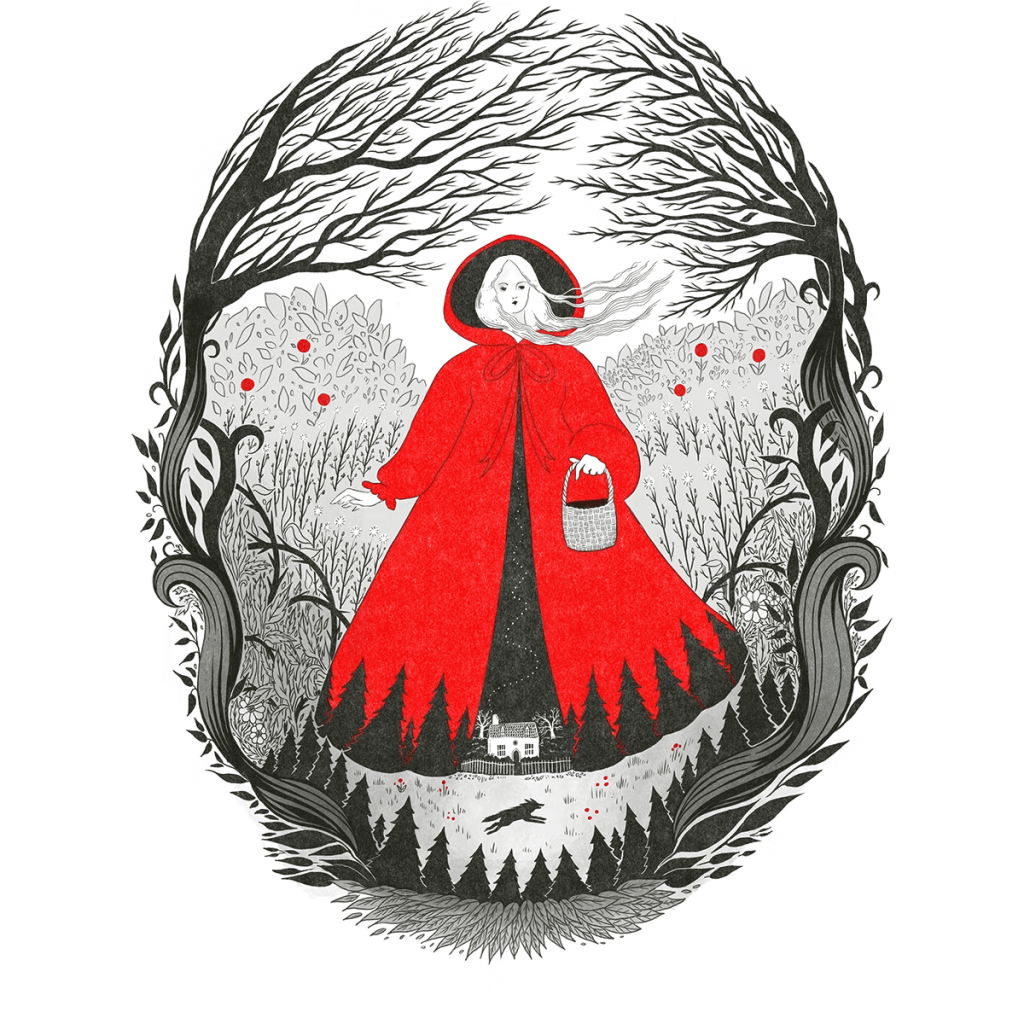
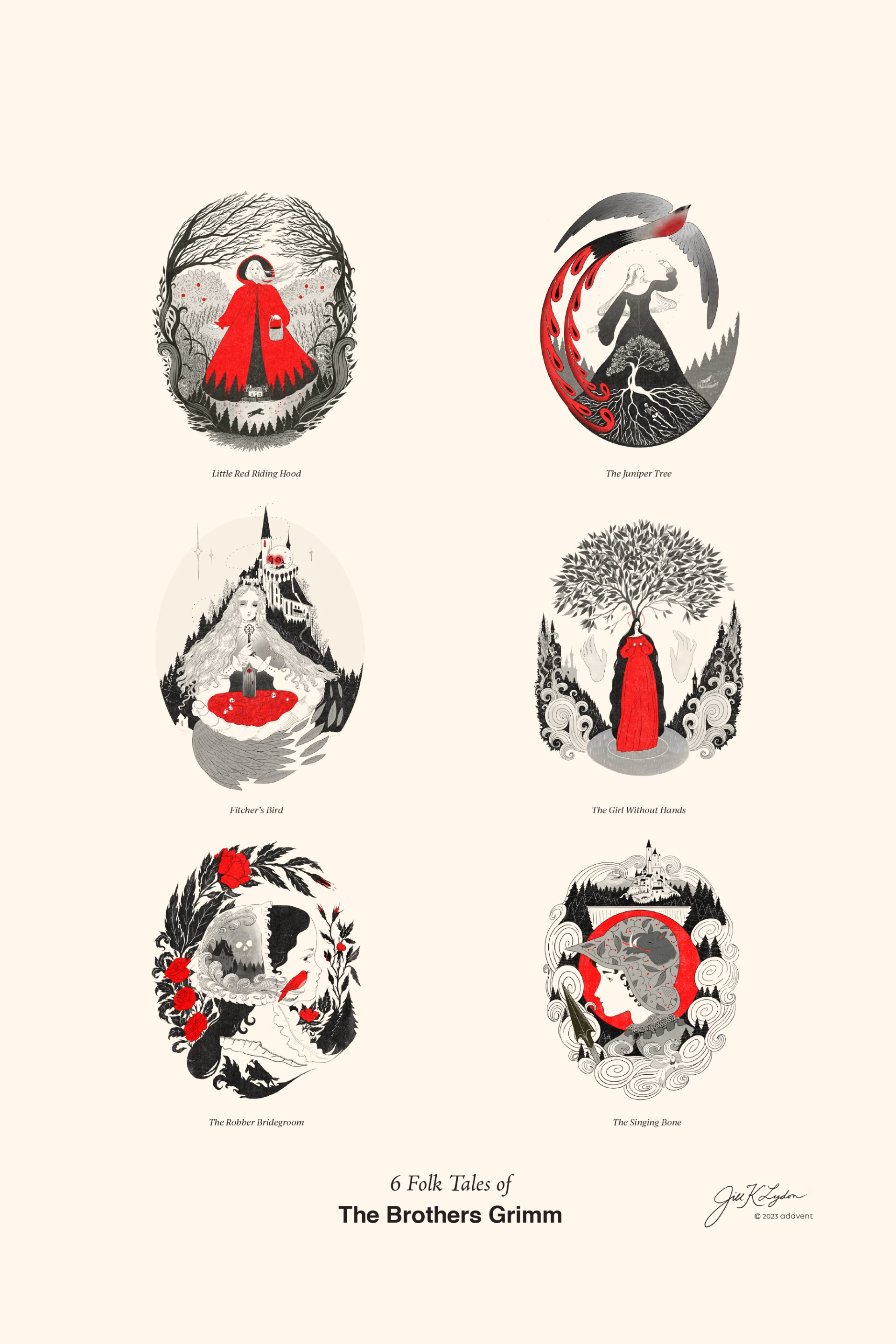
The familiar entry on this list has sharper teeth than most modern retellings. In Charles Perrault’s earlier French version, Little Red Riding Hood gets eaten by the wolf. In the Grimms’ telling, a huntsman frees her and her grandmother, and Red-Cap fetches great stones to fill the wolf’s belly, so heavy that when he wakes and tries to run, he collapses and dies.
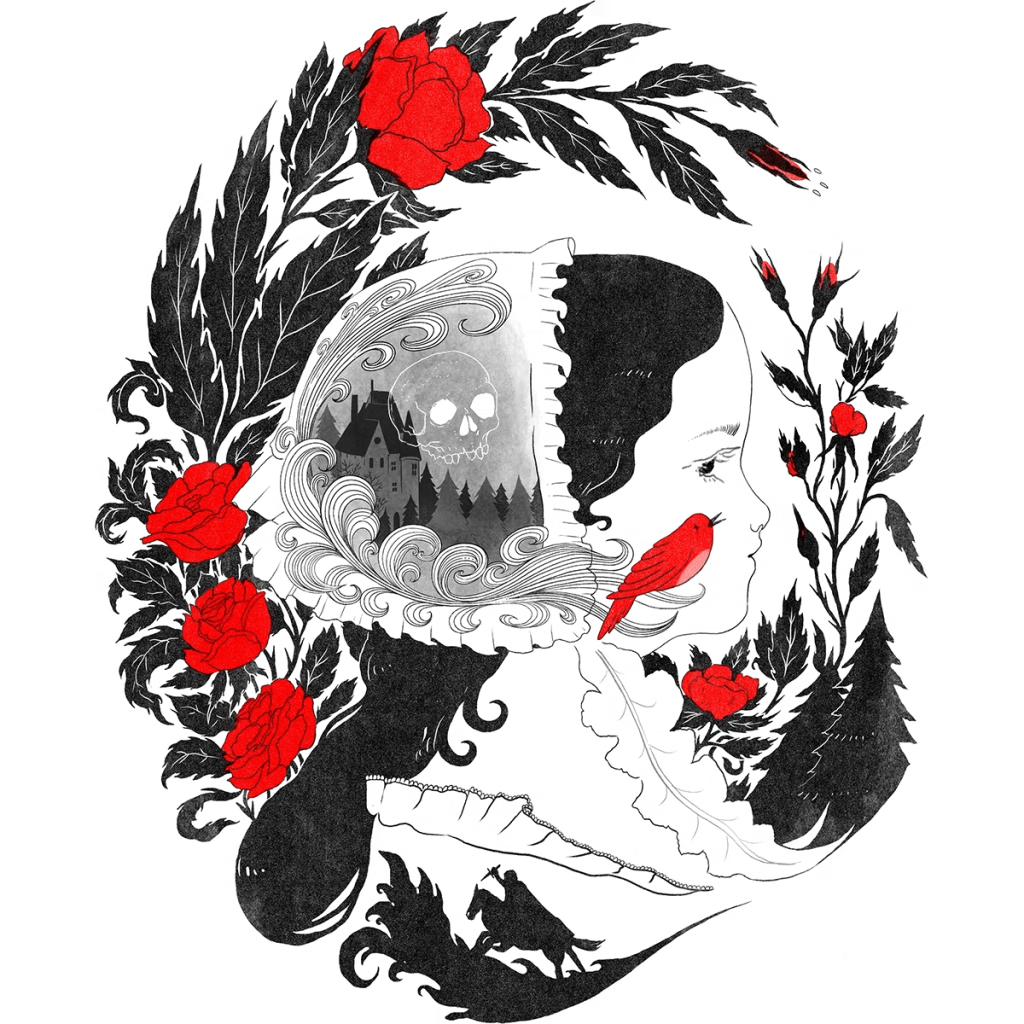
A miller’s daughter visits her wealthy suitor’s house deep in the woods, where a bird in a cage warns her that she is walking into danger. While hiding, she watches the robbers kill a young woman, and a severed finger wearing a gold ring springs into the air and falls into her lap. At her wedding feast, she tells the story to the guests and pulls out the finger as proof of her groom’s crimes.
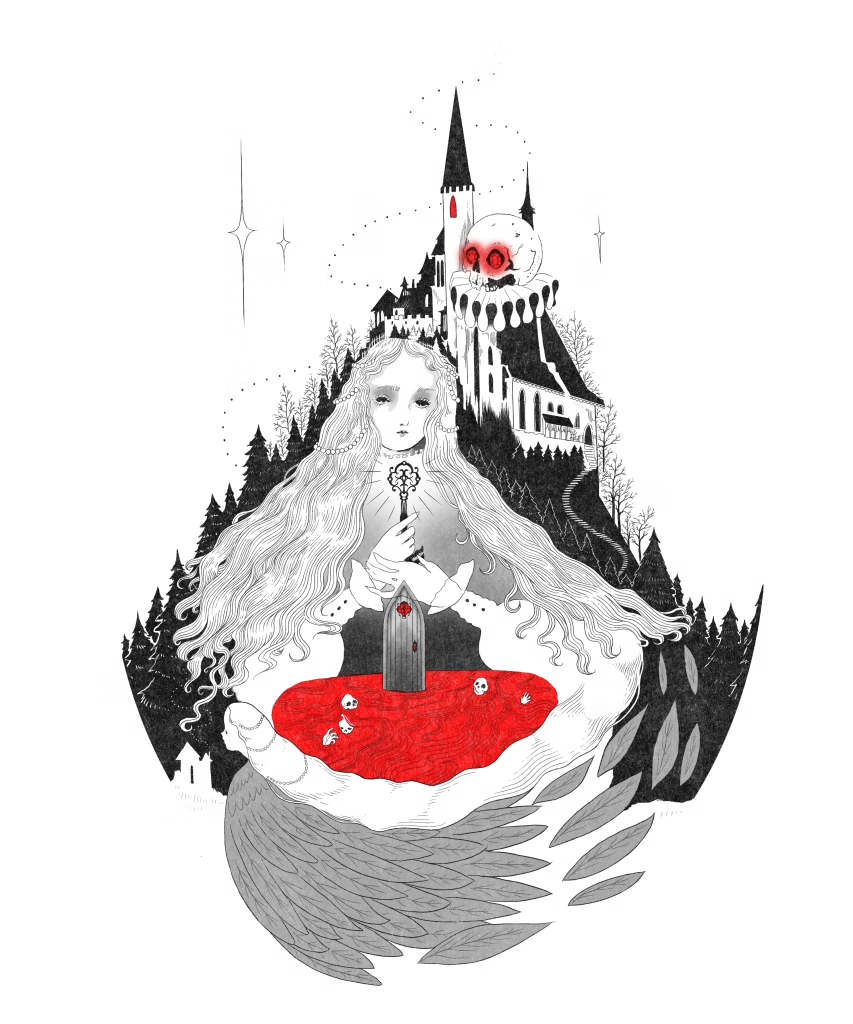
In this tale, a sorcerer disguises himself as a beggar and goes door to door abducting young women. He hands each captive a key and an egg, forbidding her one room. The first two sisters peek, stain their eggs with blood, and are killed. The clever third sister reassembles them, then dips herself in honey and rolls in feathers until she looks like a strange bird and escapes. It is a close relative of Bluebeard.
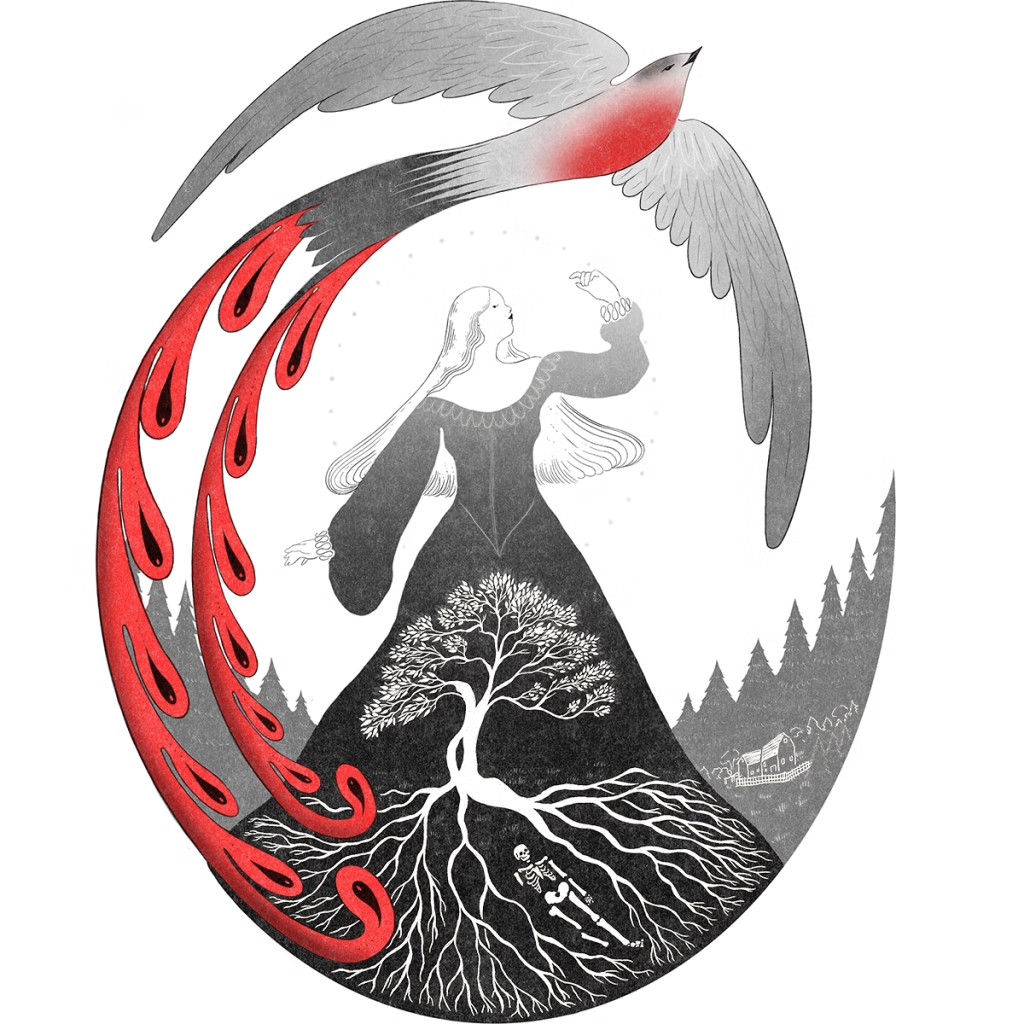
This is one of the most disturbing stories the Grimms ever published. A boy is murdered and made into a stew by his stepmother, his bones are buried beneath a juniper tree, and he returns as a bird who enlists the townspeople to help him take revenge. Reactor points out that the Grimms gave full credit in their notes to painter Philipp Otto Runge for providing the tale.
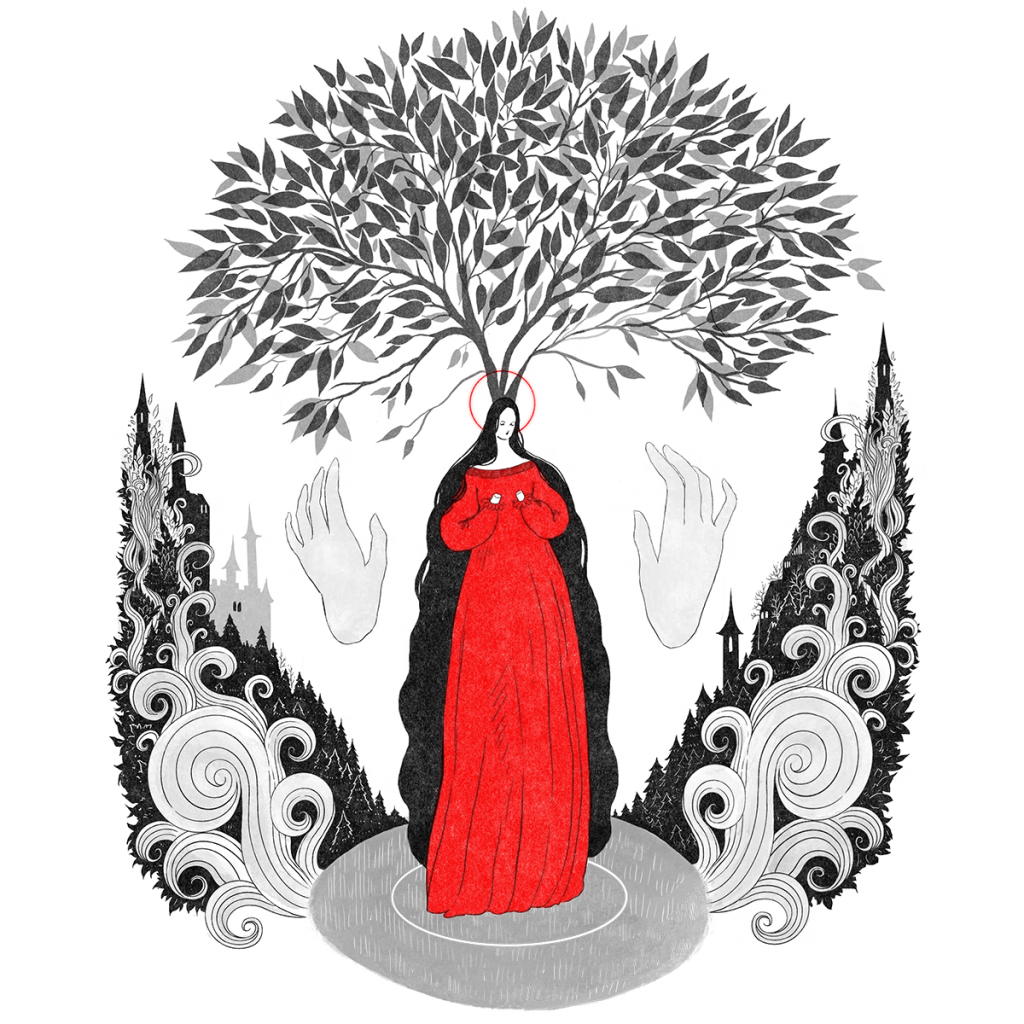
A struggling miller makes a deal with the devil and unknowingly trades away his own daughter. When her goodness keeps the devil from claiming her, the miller cuts off her hands. In folklorist D. L. Ashliman’s translation, a king has silver hands made for her, and after years of hardship in the forest, her chopped-off hands grow back. The story inspired an acclaimed 2016 French animated film, hand-painted with lush, evocative details.
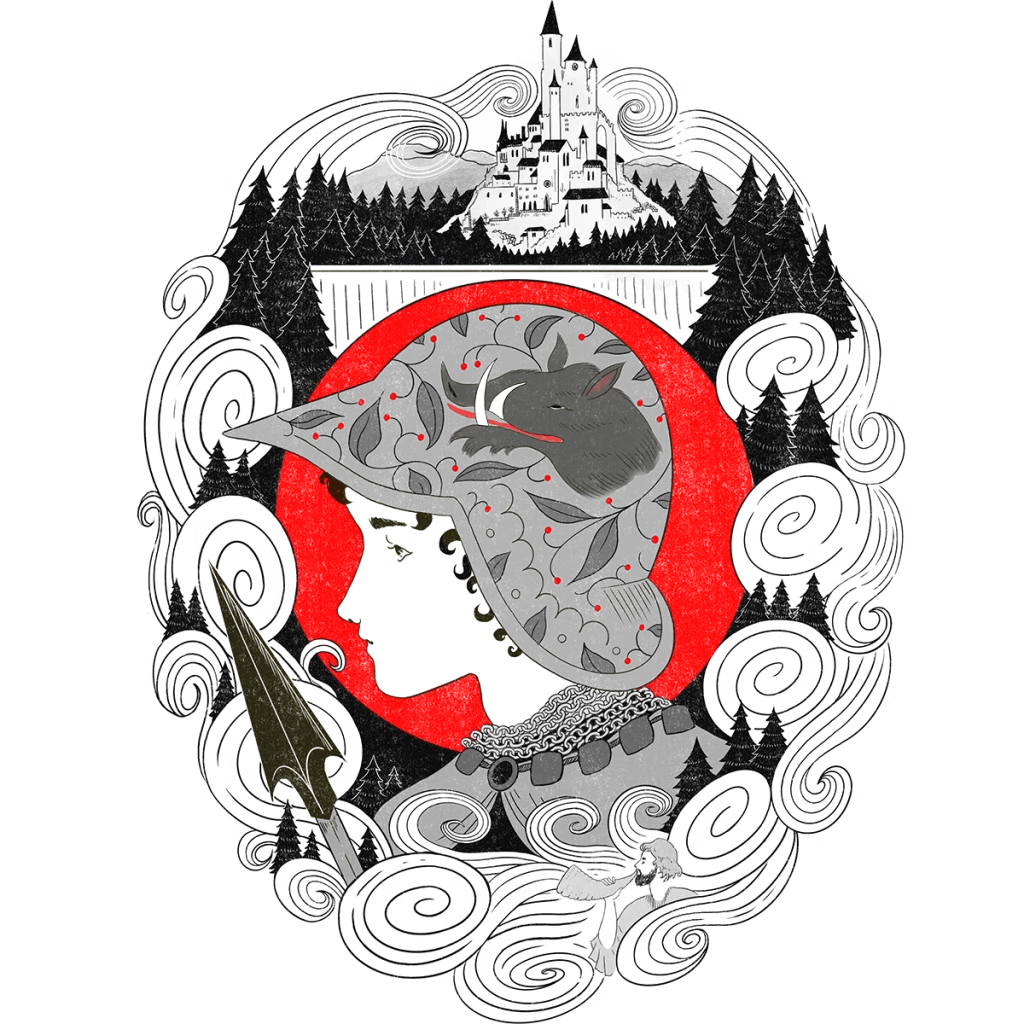
A king promises his daughter to whoever can kill a wild boar terrorizing the countryside. When the kind younger brother succeeds, his jealous older brother kills him, buries him beneath the bridge, and delivers the boar to the king, pretending he killed it himself. Years later, a shepherd carves a horn mouthpiece from a white bone found there, and the bone begins to sing by itself. Ashliman has gathered related versions from French Louisiana, Switzerland, and Iceland.
This collection of illustrations captures the betrayal, transformation, and quiet menace running through each of these Grimm stories. Delicate, atmospheric linework and symbolic detail turn murdered brothers, singing bones, and feathered brides into images that feel both beautiful and unsettling. Which tale stays with you longest? Have you read them all in their original, unsoftened form?

READY TO EXPLORE?
If you’re the kind of person who wants to do more than skim a list, and instead wants to truly read, discover, and complete a journey like this one, we’ve got you covered. At Addvent, we create illustrated lists of places to visit, things to see, and things to do, commissioned as beautiful posters you can display as a reminder of what you’ve accomplished.
Read all six of these dark Grimm tales, check each one off your list, and celebrate the journey with a Six Folk Tales of the Brothers Grimm poster of your own. These gothic fairy tale prints make meaningful gifts for book lovers, folklore enthusiasts, English and literature teachers, and anyone drawn to dark, beautiful storytelling.