25.08.2026
9 Historic Capitals of
United States


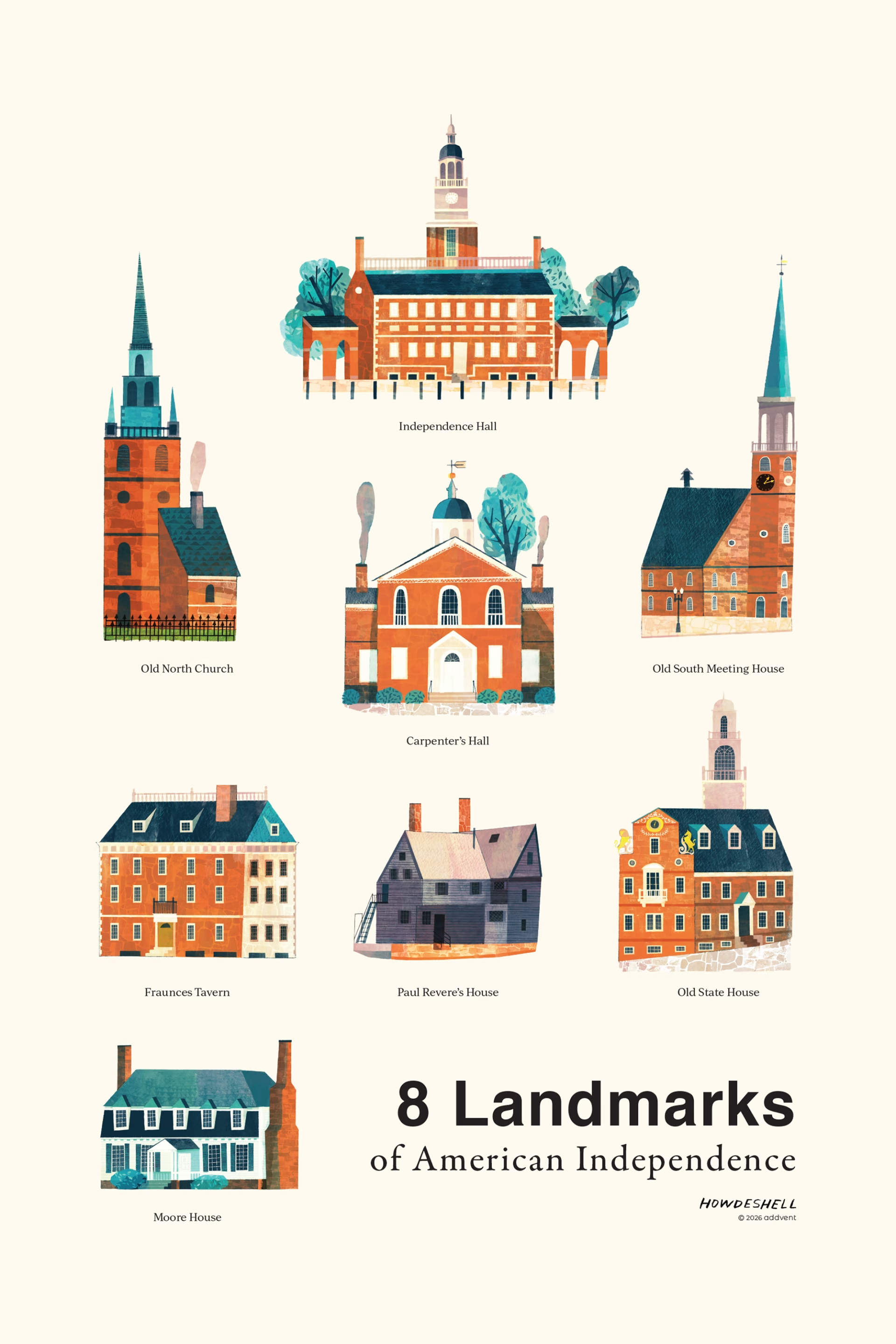
Built between 1732 and 1753 as the Pennsylvania State House, this Philadelphia building is where the Declaration of Independence was adopted on July 4, 1776, and where delegates later drafted the U.S. Constitution in 1787. It’s now a UNESCO World Heritage Site managed by the National Park Service as the centerpiece of Independence National Historical Park.

Just steps from Independence Hall, this 1770 guild hall built by the Carpenters’ Company hosted the First Continental Congress in September 1774, where delegates from twelve colonies first organized a unified response to British policy. The building still belongs to the Carpenters’ Company, the oldest trade guild in the country, and remains open to visitors.

Boston’s oldest surviving public building, constructed in 1713, stood near the site of the 1770 Boston Massacre and served as the seat of colonial government. The Declaration of Independence was read from its balcony to Boston crowds on July 18, 1776. Today it’s run as a museum by Revolutionary Spaces.

This 1729 Puritan meeting house became the largest gathering space in colonial Boston, and it’s where thousands crowded in on December 16, 1773, before marching to the harbor to stage the Boston Tea Party. Also preserved by Revolutionary Spaces, it remains one of the clearest physical links to that turning point.

Boston’s oldest standing church, built in 1723, is forever tied to April 18, 1775, when sexton Robert Newman hung two lanterns in its steeple to signal that British troops were crossing the Charles River by boat. That “one if by land, two if by sea” moment, later immortalized by Longfellow, still draws visitors to the Old North Church today.
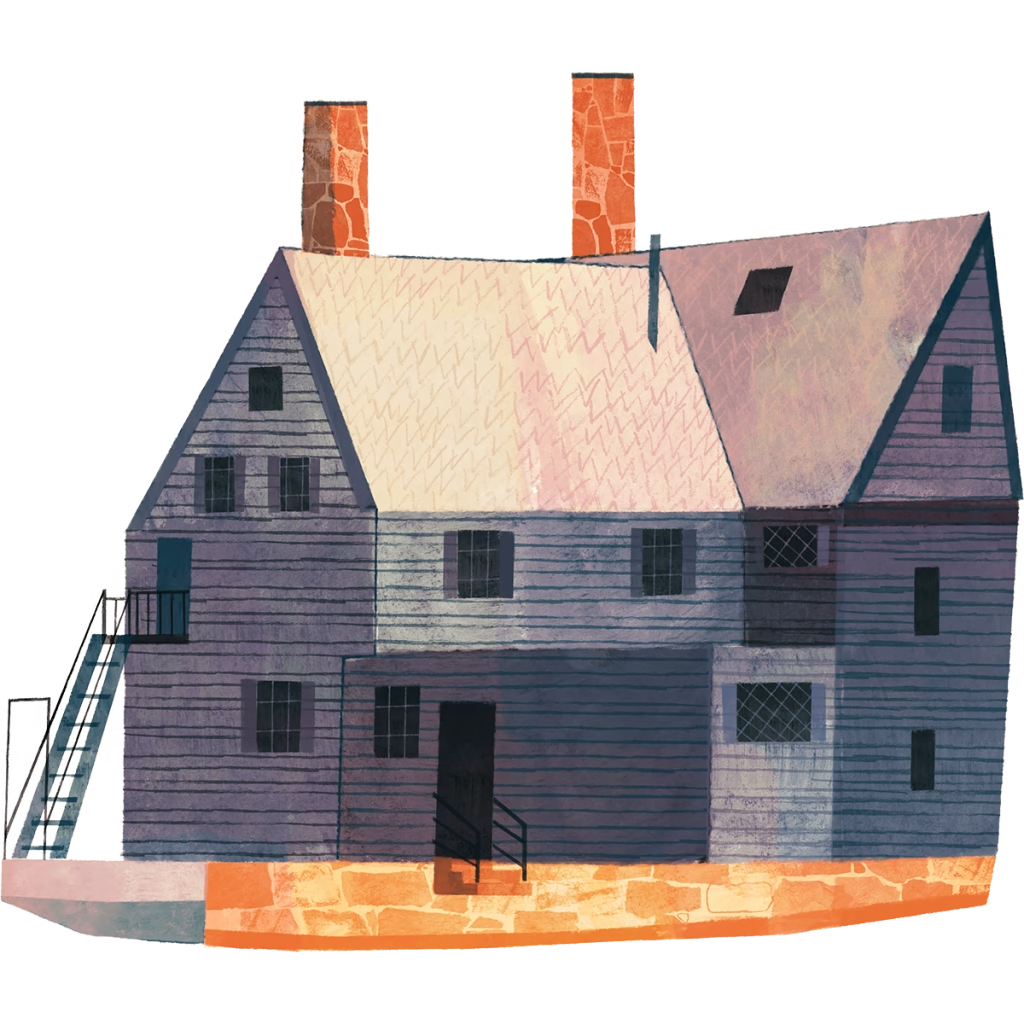
Tucked in Boston’s North End, this timber-frame home dates to around 1680, making it the oldest remaining structure in downtown Boston. Paul Revere owned it at the time of his 1775 midnight ride to warn colonial militia of the approaching British. It has operated as a museum since 1908, according to the Paul Revere House.

Built in 1719 as a private residence before becoming a tavern in 1762, this Lower Manhattan building is best known as the site of George Washington’s farewell address to his officers on December 4, 1783, after the British evacuated New York. It now houses a museum operated by the Sons of the Revolution, the same organization that has preserved it since 1904.

This modest farmhouse property in Yorktown, Virginia, is where American, French, and British officers met on October 18, 1781, to negotiate the terms of surrender following the Siege of Yorktown, effectively ending major combat in the Revolutionary War. The house is preserved by the National Park Service as part of Colonial National Historical Park.
This collection of illustrations traces the physical path of American independence, from the halls where ideas were debated to the rooms where wars were ended. Have you seen all eight in person?

READY TO EXPLORE?
If you’re the kind of person who wants to do more than just visit, and instead wants to truly experience, complete, and celebrate an adventure like this one, we’ve got you covered.
Visit all 8 landmarks of US independence, check each one off your list, and celebrate the journey with a poster of your own.