25.08.2026
8 Landmarks
of U.S. Independence


Philadelphia served as the capital of the United States longer than any other city on this list, hosting the Continental Congress and later the Constitutional Convention across multiple stretches from 1774 through 1800. It was here that the Declaration of Independence was signed in 1776, that the Constitution was drafted in 1787, and that the federal government operated during the presidencies of both George Washington and John Adams. Independence National Historical Park, managed by the National Park Service, preserves much of the original landscape of this founding history, including Independence Hall and the Liberty Bell.

Baltimore served briefly as the meeting place of the Second Continental Congress in the winter of 1776 to 1777, when British forces threatened Philadelphia and the Congress was forced to relocate. Though its tenure as a working capital lasted only a matter of months, Baltimore was where the Congress continued to govern the revolution during one of its most precarious stretches. The Maryland Center for History and Culture holds extensive records and artifacts documenting this period of the city’s history.

Lancaster, Pennsylvania holds the rare distinction of being the capital of the United States for exactly one day, September 27, 1777, when Congress fled Philadelphia ahead of British occupation and stopped briefly in Lancaster before pressing on to York. Despite the brevity of that stay, Lancaster’s role in the Revolutionary War was substantial. The city was a major supply hub for the Continental Army, producing rifles, ammunition, and other provisions throughout the war.

After pausing in Lancaster, the Continental Congress reconvened in York, Pennsylvania, where it remained from September 1777 to June 1778. York is where Congress adopted the Articles of Confederation, the first governing document of the United States, and where it issued an appeal to France for military alliance — a request that would prove decisive in the outcome of the Revolution. The Colonial Complex in downtown York preserves the original courthouse where Congress met, along with several other historic buildings from the era.

Annapolis holds a distinction few American cities can claim: it served as the temporary capital of the United States from November 1783 to August 1784, and it was here, in the Maryland State House, that General George Washington resigned his commission as commander-in-chief of the Continental Army. The Maryland State House is the oldest state capitol building still in continuous legislative use in the country, and the room where that resignation took place still stands largely as it was.

Princeton served as the capital of the United States for a brief but significant period in 1783, when Congress relocated there from Philadelphia following the Pennsylvania Mutiny, in which unpaid Continental soldiers surrounded the State House and demanded their wages. The Congress met at Nassau Hall on the campus of what is now Princeton University, making it one of the few institutions of higher learning to have hosted the national legislature. It was also in Princeton that Congress received the news of the Treaty of Paris, formally ending the Revolutionary War. Nassau Hall still stands and remains central to Princeton’s campus.
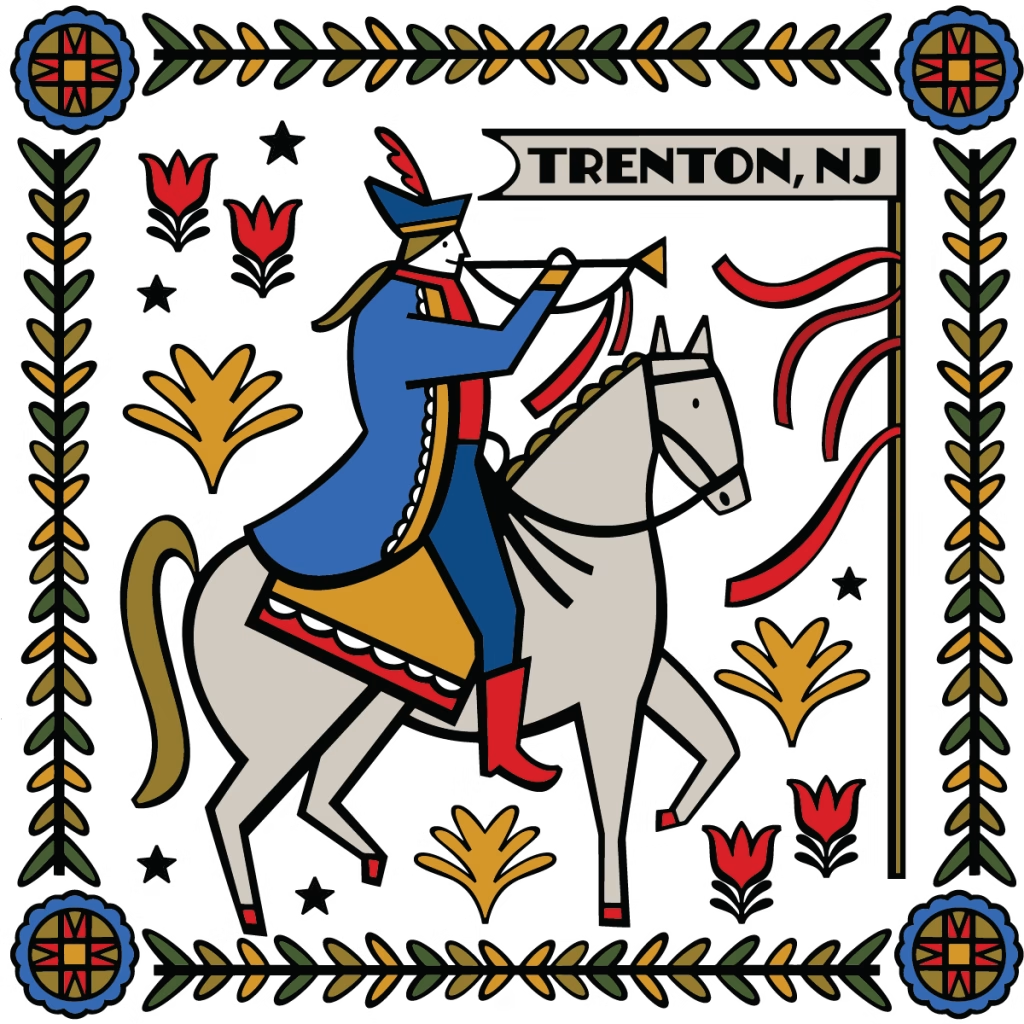
Trenton served as the capital of the United States for a short period in the fall of 1784, when Congress met there while searching for a more permanent home. The city already carried considerable weight in American history as the site of George Washington’s famous crossing of the Delaware River on December 26, 1776, and the subsequent Battle of Trenton, which turned the tide of the Revolution at one of its lowest points. The Old Barracks Museum in Trenton preserves one of the only remaining Colonial-era military barracks in the United States.
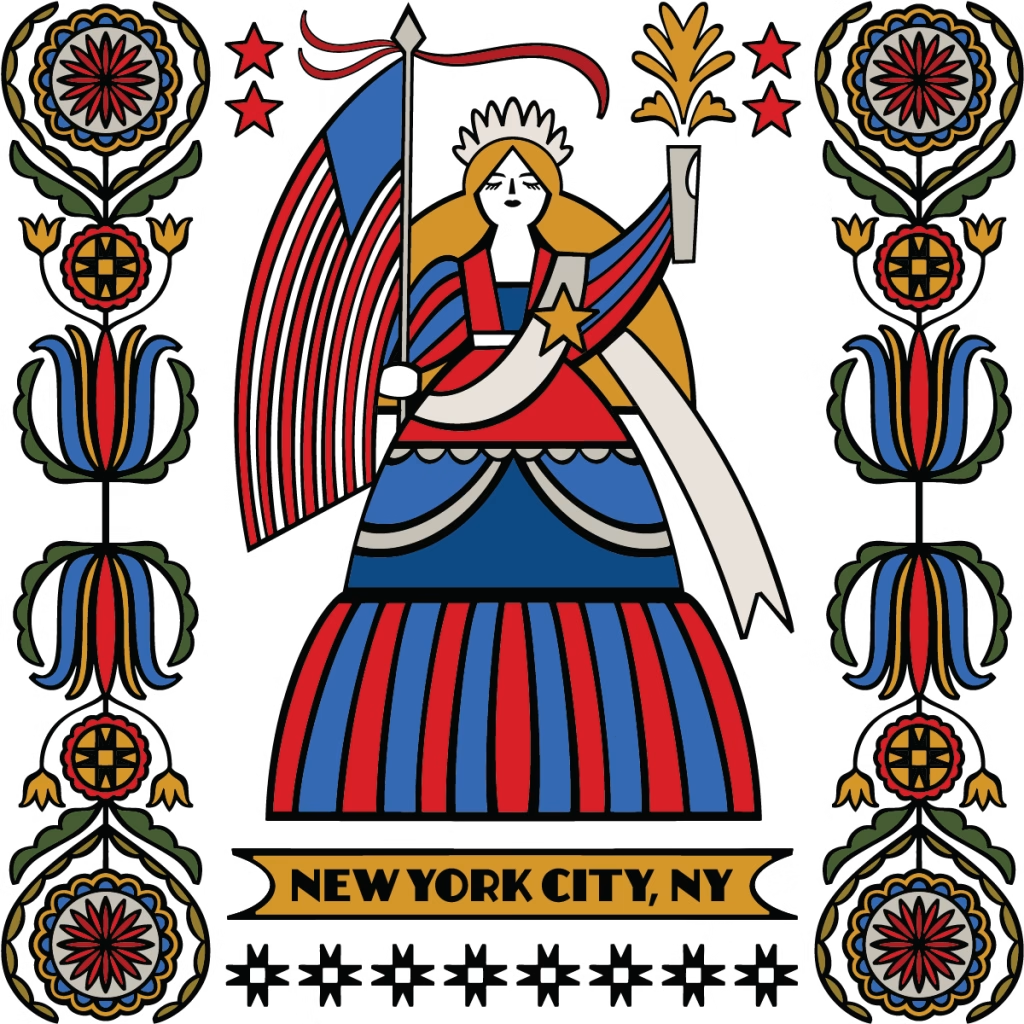
New York City served as the first capital of the United States under the Constitution, from 1789 to 1790, and it was here that George Washington was inaugurated as the nation’s first president on April 30, 1789. The Federal Hall National Memorial marks the site today, though the current building was constructed in 1842. During New York’s tenure as capital, Congress passed the Bill of Rights and established the first executive departments of the federal government.

Washington, D.C. became the permanent capital of the United States on December 1, 1800, when President John Adams moved into the still-unfinished President’s House and Congress convened for the first time in the new Capitol building. The city itself was purpose-built on land ceded by Maryland and Virginia along the Potomac River, designed by Pierre Charles L’Enfant to reflect the ideals and ambitions of the young republic. Today, the National Mall and its surrounding monuments and institutions form one of the most visited stretches of public space in the world, anchoring the seat of American democracy just as it was intended to from the start.
This collection of illustrations moves through American history in bold black outlines and a palette of white, blue, and gold. It’s a visual language that feels as deliberate and enduring as the cities themselves. Each image captures not just a place, but a moment in the formation of a country, from the one-day stop in Lancaster to the grand permanence of Washington.

READY TO EXPLORE?
If you’re the kind of person who wants to take the next step and truly experience each one of these locations, we’ve got you covered.
Visit all 9 historic US capitals, check each one off your list, and celebrate the adventure with a poster of your own.