25.08.2026
8 Landmarks
of U.S. Independence


Jamestown, founded in 1607 by the Virginia Company of London, became the first permanent English settlement in North America. Tobacco fields soon lined the riverbanks, protected by a wooden palisade around the fort. Parts of that early landscape live on today at Colonial Williamsburg.

Massachusetts traces back to 1620, when the Pilgrims landed at Plymouth aboard the Mayflower seeking religious freedom, followed by the larger, Puritan-led Massachusetts Bay Colony in 1630. Its rocky shoreline and simple wood-frame homes shaped a fishing and shipping economy that came to define early New England.

English colonists began settling New Hampshire in 1623 under a grant to John Mason, who saw opportunity in the region’s tall pine forests and river access for logging and shipbuilding. The colony operated under Massachusetts oversight for decades before becoming its own royal colony in 1679.

Maryland was founded in 1634 by Leonard Calvert on behalf of his father, Cecilius Calvert, the second Lord Baltimore, as a colony meant to offer refuge to English Catholics facing persecution at home. Its tidewater shoreline and tobacco fields relied on Chesapeake Bay boats for trade and travel.

In 1636, Thomas Hooker led a group of settlers from Massachusetts Bay to found Hartford along the Connecticut River. Farm fields spread out from the riverbank, and a large meeting house often anchored town life, three years before colonists adopted the Fundamental Orders of Connecticut in 1639.

Rhode Island began in 1636, when Roger Williams was banished from Massachusetts Bay for arguing that church and government should stay separate. He founded Providence along the open shoreline, and the colony became known for welcoming religious dissenters other colonies had turned away.

Swedish colonists settled along the Delaware River in 1638, building log cabins on land that became New Sweden. The Dutch took over in 1655, and the English followed in 1664, folding Delaware into Pennsylvania before it gained its own colonial assembly in 1704.

Settlers from Virginia moved into the Albemarle region in the 1650s, years before North Carolina was formally separated from South Carolina in 1712. Its sandy coastal shoreline and marsh grasses supported a tar and pitch industry that made naval stores one of the colony’s most valuable exports.
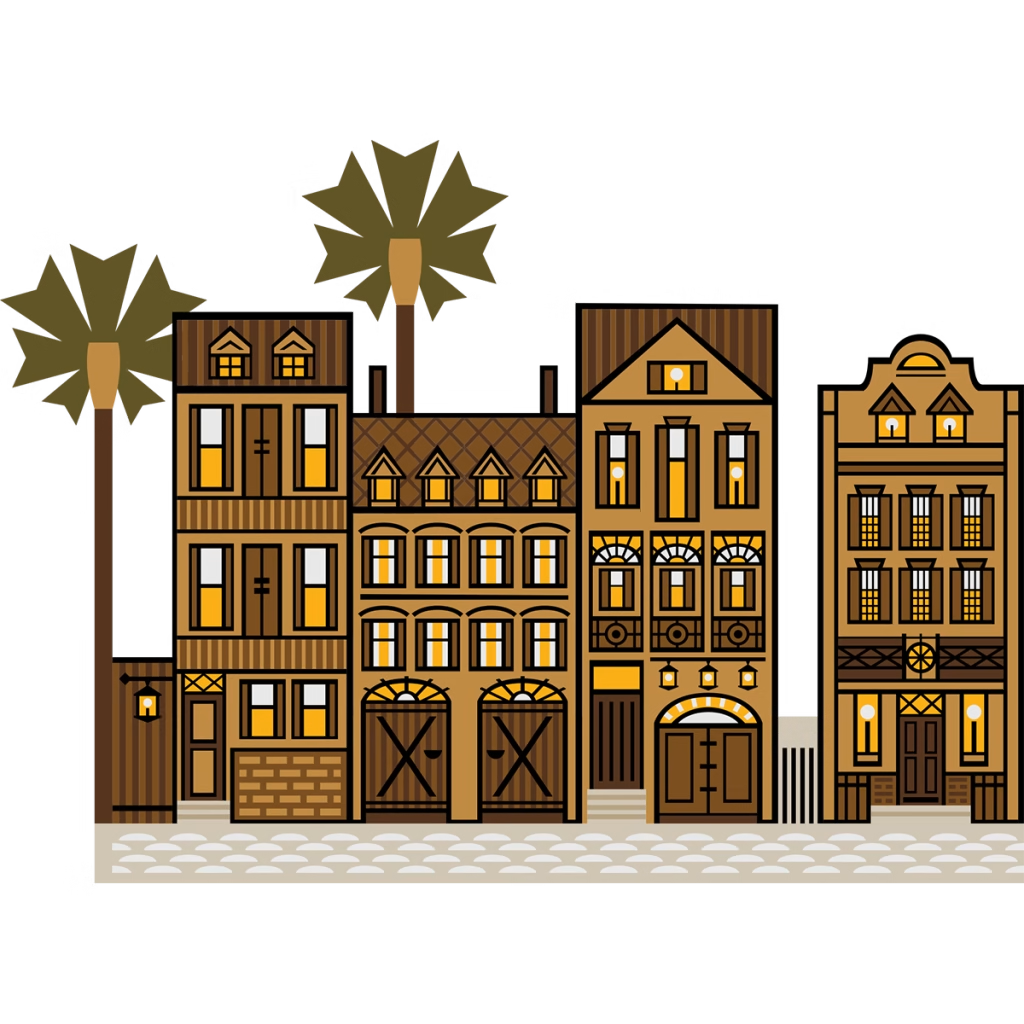
Charles Town, founded in 1670 as part of the 1663 Carolina land grant, grew into a wealthy port built on rice and indigo grown across the lowcountry marsh. That plantation economy set South Carolina apart from its northern counterpart, and the two colonies formally split in 1712.

New York began in 1624 as the Dutch colony of New Netherland, centered on the trading post of New Amsterdam along the Hudson River. Windmills and dockside trading houses once lined its waterfront before England seized the colony in 1664 and renamed it after the Duke of York.

New Jersey became an English colony in 1664, carved out of former Dutch territory and granted to two proprietors. Orchard rows and farmhouses spread across its gentle hills, and the colony operated as two separate halves, East and West Jersey, before reuniting in 1702.

William Penn founded Pennsylvania in 1681 as a Quaker colony built on religious tolerance, laying out Philadelphia’s streets in a strict grid. Just blocks from the old Delaware River docks, Elfreth’s Alley still stands as one of the oldest continuously inhabited residential streets in the country.

James Oglethorpe founded Georgia in 1732, the last of the 13 colonies, partly as a fresh start for English debtors and partly as a defensive buffer against Spanish Florida. Savannah’s original grid of public squares, laid out that same year, still shapes the city’s historic district today.
This collection of illustrations leans into the everyday textures of colonial life: wooden palisades, tobacco rows, meeting houses, and riverfront docks. The bold colors and clean compositions capture the environment each colony grew from, from Georgia’s coastal plain to New Hampshire’s pine forests. How many of these founding stories did you already know, and how many surprised you?

READY TO EXPLORE?
Trace the founding of all 13 original colonies and pick up a poster of your own to mark the journey. This colonial history print makes a meaningful gift for history buffs, teachers, and anyone who loves tracing where a story began.